

Project management at Drupal agencies is frustratingly slow. Making simple changes like adding a menu item takes 8 steps, a couple of weeks, and racks up a €1,000 bill.
This is what Astra (Denmark’s national center for science education) dealt with every day with the 3rd-party websites in their network. These sites collaborated with teachers, institutions, and policymakers to improve science education, offering resources and networking opportunities for science professionals.
Astra hired Bjarne Oldrup (web developer) to reduce turnaround time and web development costs for their 3rd-party websites. Bjarne worked out that switching to a WordPress and Blocksy Theme setup would shorten execution time (from weeks to 15 minutes) and eliminate the need for costly Drupal agencies.
Finding Alternatives to Slow & Costly Drupal Agencies
A two-part alternative was found: swap Drupal for WordPress and bring development in-house.
Like Drupal, WordPress was free and open source. But unlike Drupal, WordPress had a much larger pool of talented developers, which meant that Astra could hire cost-effectively. A multitude of add-ons (like themes and plugins) were available at affordable prices, keeping development within budget. Take, for instance, Blocksy – it’s free and comes with an optional Companion plugin at a sustainable price of $149 per annum or a $499 one-time fee.
Along with reasonable price points, WordPress add-ons come feature-complete, so there’s no need to build the website from scratch.

“With WordPress and a largely feature-complete theme like Blocksy, the in-house dev can implement, test, and deploy a new menu item before lunch,” says Bjarne.
That isn’t to say WordPress add-ons are uncustomizable. There are plenty of non-proprietary WordPress add-ons that do not lock developers into the system, making it easy for in-house teams to create custom builds.
Testing a WordPress Tech Stack
The Gutenberg Editor and Blocksy Theme formed the best WordPress tech stack for ensuring Astra’s 3rd-party websites were fast, secure, accessible, and sustainable.
Bjarne had used other page builders like Divi, but Gutenberg, being WordPress’ native editor, was faster, integrated well with the core, and came equipped with powerful pre-built blocks and patterns that could be used to build entire websites.
Blocksy was deeply integrated with Gutenberg and had its own library of custom blocks and patterns to fill Gutenberg’s gaps.
“Blocksy took care of all the stuff that Gutenberg sucked at in the beginning. Pretty UI; A functional customizer. Menus. Woo. With V2 of Blocksy, good support for theme.json; well-named custom properties; I’m almost dancing around integrating everything like WSForm and my own CSS. The DRY principle.” – Bjarne Oldrup
To test the Gutenberg + Blocksy tech stack, Bjarne used tools like:
- Google Lighthouse and WebPageTest for speed
- Mozilla HTTP Observatory for security
- Manual testing combined with the Equalize Digital Accessibility Checker for accessibility
- Tools similar to websitecarbon.com and ecograder.com for carbon footprint
Highest grades or scores, like 100/100 on Lighthouse and Grade A on carbon, were achieved from the get-go.
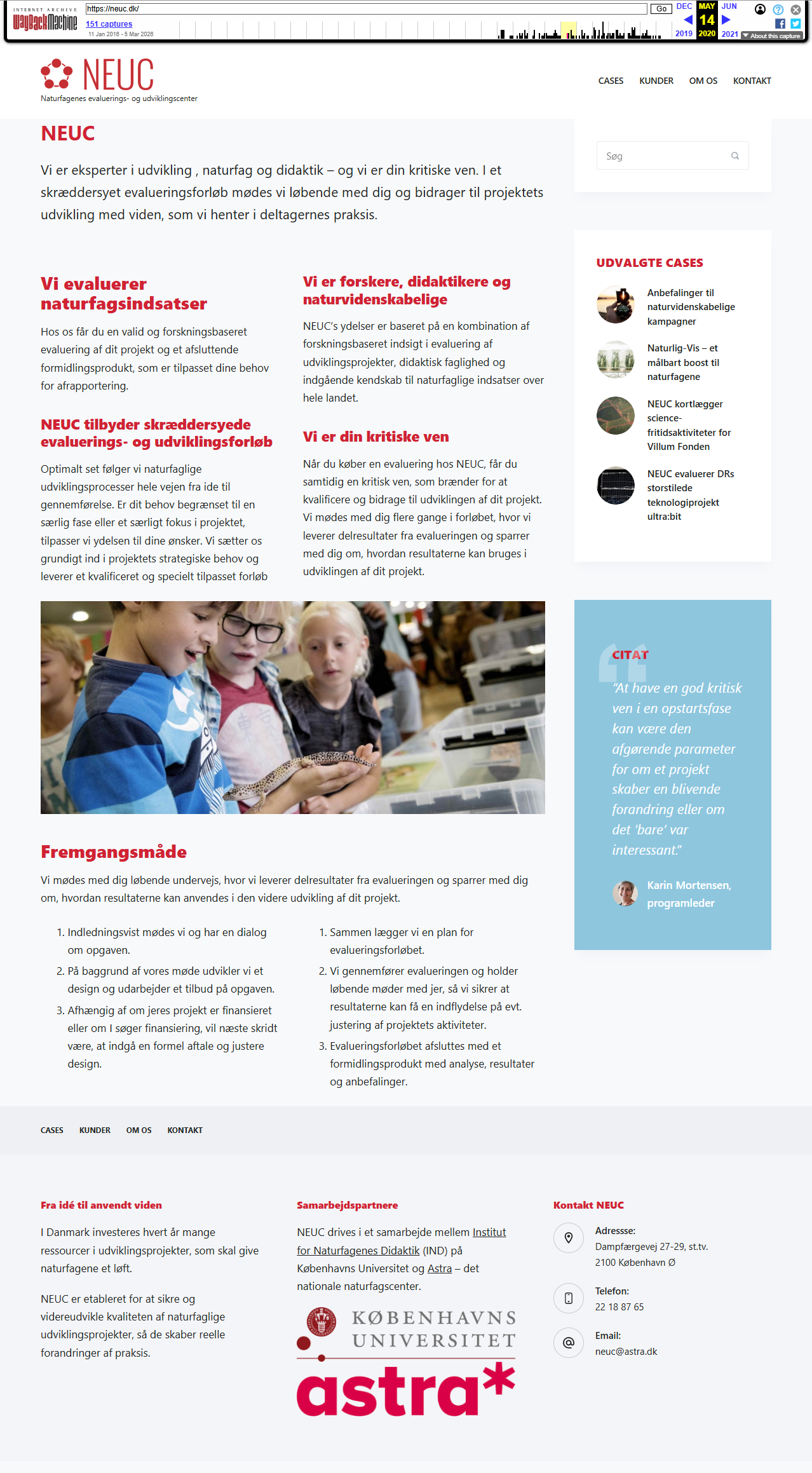
Satisfied with the test results, Bjarne proceeded to migrate one of Astra’s 3rd-party sites – neuc.dk (offline now) from Drupal to WordPress. The migration went smoothly, and the website on the new CMS was fast-loading, eco-friendly, inclusive, and secure.
“With Gutenberg taking care of the content and Blocksy taking care of everything else, everyone was happy,” says Bjarne about the test project.
Migrating All Drupal Sites to WordPress & In-House Team Taking Charge
The migration made Astra’s 3rd-party sites more visible in search and resilient during peak traffic seasons.
Bjarne wrote a detailed report about his test migration.
“It’s very helpful to be able to demonstrate that accessibility issues were eliminated, estimated carbon emissions went down 80+%, and loading time was reduced accordingly.” – Bjarne Oldrup
Astra executives greenlit the migration for all their 3rd-party websites. As a result, minor changes, like adding a menu item, that took weeks for Drupal agencies to implement, now took 15 minutes. Interns began making simple website modifications, freeing senior developers to focus on more complex projects.
Not long after the migration, Bjarne spotted improvements in SERP positions.
“SEO kicked in; big time. WordPress SEO is pretty good out of the box, and with a focus on making things accessible and performant, ranking almost always improves as well.” – Bjarne Oldrup
He also noticed that the websites were handling traffic surges of up to 40,000 users during workshops or conferences – with no major hiccups.
Bjarne continued at Astra for a few more weeks, running additional accessibility compliance tests, optimizing performance, and implementing technical SEO before moving on to other clients.
From Employee to Independent Business Owner: WordPress, Gutenberg, & Blocksy Form the Go-To Setup
As an independent web development business owner now, Bjarne relies on the WordPress-Gutenberg-Blocksy tech stack for its low-cost, fast-turnaround benefits.
Bjarne has added a Blocksy Companion plugin license to the mix, but that doesn’t mean his business costs have gone up. The plugin’s unlimited website plan lets him scale his client base without escalating costs.
On top of that, using the same WordPress-Gutenberg-Blocksy tech stack as the default starting point for new builds and rebuilds prevents him from wasting time learning new software.
“Find your own curated tech stack you are comfortable with; test it, and stick to it.”
– Bjarne Oldrup
The same stack that once served a national institution with traffic reaching up to 40,000 during rush hour now runs Bjarne’s solo business with a full client roster – proving that faster delivery does not mean higher business expenditure.