

It’s 2026. You want to create a blog. It’s easy and affordable.
Here’s a problem, though: over a billion websites exist online. Adding another blog is like pouring a drop of water in the ocean – not enough to create even a ripple.
Blogging is no longer a ‘just-post-it-and-Google-will-rank’ activity. It requires consistent hard work.
You can become a successful blogger, but you need a long-term vision and firm guidance.
We have learned from experience that there are a handful of steps you can take to make it big in blogging.
Step 1: Choose a Niche With Traffic Potential (Arguably the Most Important Step)
The end goal is to draw traffic to your blog. Pick a broad enough niche that has good traffic potential.
Say, for instance, you are interested in Juniperus – it’s a type of Bonsai tree.
Ask yourself: how many people would want to read about Juniperus? Likely, very few. Therefore, the traffic potential is very low.
A broad enough niche would be ‘bonsai trees.’ Not too big (like ‘Plants’), not too narrow (like ‘Juniperus’).
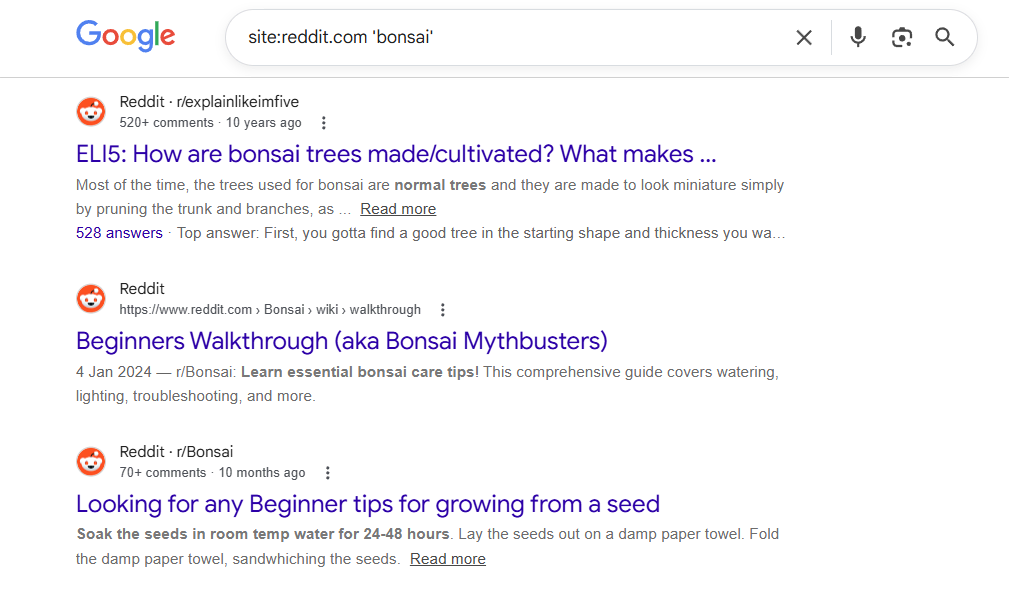
A quick Reddit search shows several queries from bonsai beginners and enthusiasts. They have queries about bonsai tree-growing techniques, styling, care, and maintenance. That gives you a number of topic ideas that you can cover in your blog.
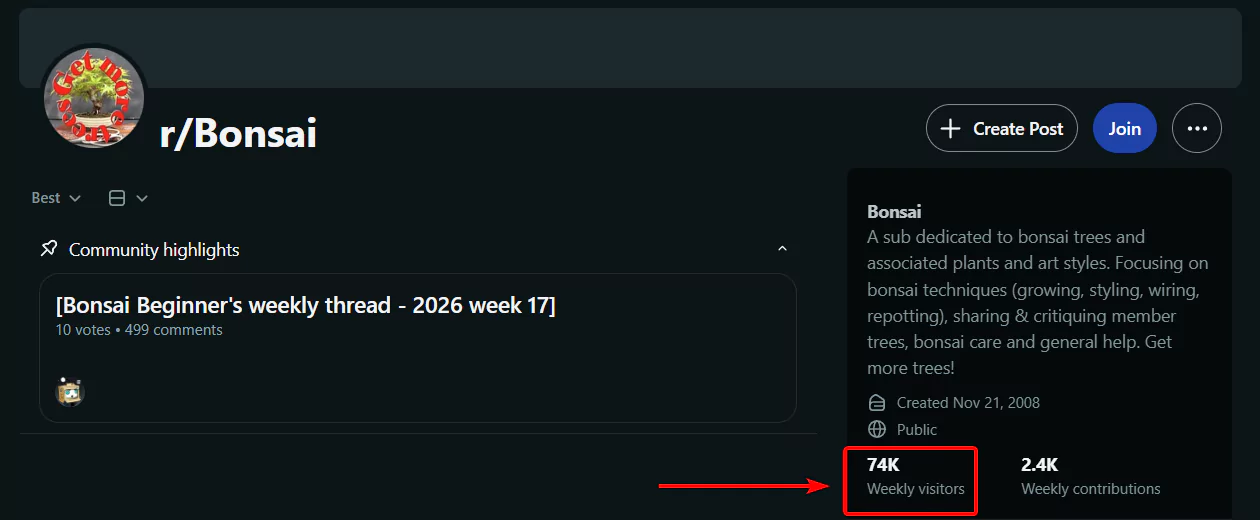
Bonsai dedicated subreddits like /r/Bonsai and /r/bonsaicommunity are drawing 25-70k weekly visitors. This helps gauge the traffic potential.
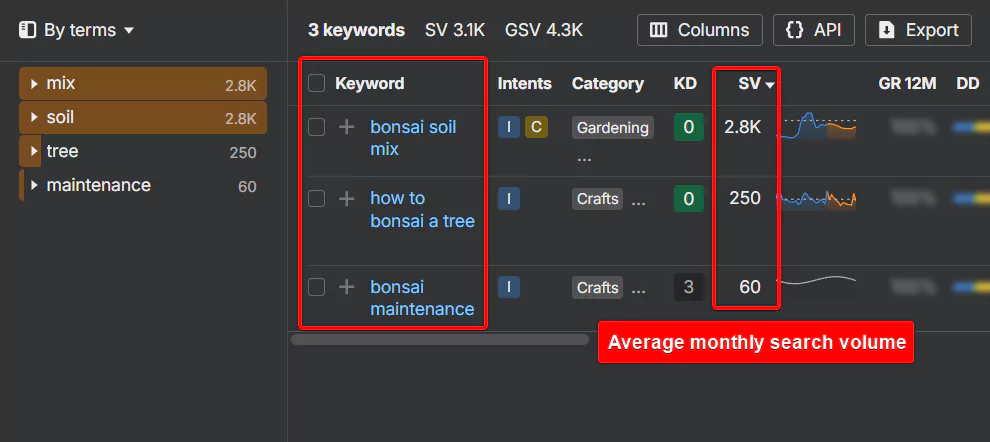
If you have access to SEO tools like Ahrefs, Semrush (industry standard tools), Ubersuggest, and Mangools (affordable options) – run a few bonsai-related topics through the keyword explorer to see how many people might be searching for them online.
A good average monthly search volume validates your niche choice.
Step 2: Build a Content Strategy (and a Calendar)
To grow your blog, you need a plan instead of posting random articles. The plan will include finding topics that you can write on and a consistent publication schedule.
To find topics, start by understanding your niche audience – what problems they face, what questions they are asking, and what is the pain point they are trying to solve.

Nicolas De Resbecq, CRO specialist at Oppizi puts it well:
“When creating a new blog from scratch, I focus on finding out what problems people face; what things are frustrating them, and what they are searching for repeatedly. Once I find this information, I create my content based on that.
Content built upon the issues people face will organically connect, and users will feel inclined to continue reading further down on the post, and even return to the blog in the future.”
Engage with communities (like Reddit, Facebook groups, forums, etc.) where your niche audience goes to seek help and identify key pressing queries. Talk to people to get a full picture of the frustrations they are facing.
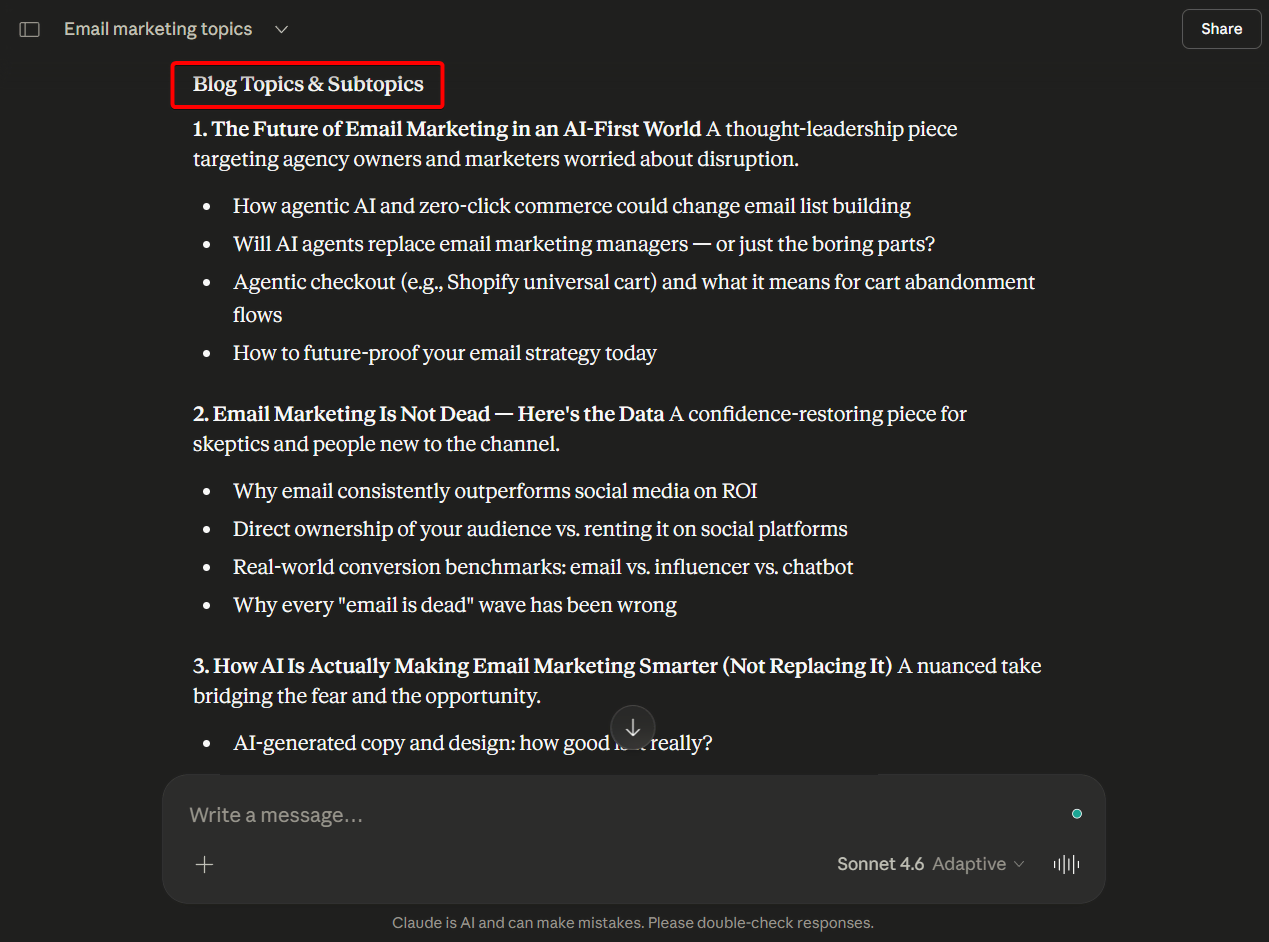
Take their queries and convert them into topics and sub-topics that you can address in your blog. You can use AI tools like ChatGPT and Claude AI for this task.
For example, on Reddit, we found email marketers expressing concerns about AI and email deliverability. We noted their pain points and fed them into Claude AI.
The tool produced 5 topics (such as ‘future of email marketing in an AI-first world,’ ’email deliverability for small businesses,’ etc.) and several subtopics addressing pain points for email marketers (‘how good are AI-generated email copies,’ ‘how to place an opt-in form for conversion,’ etc.).
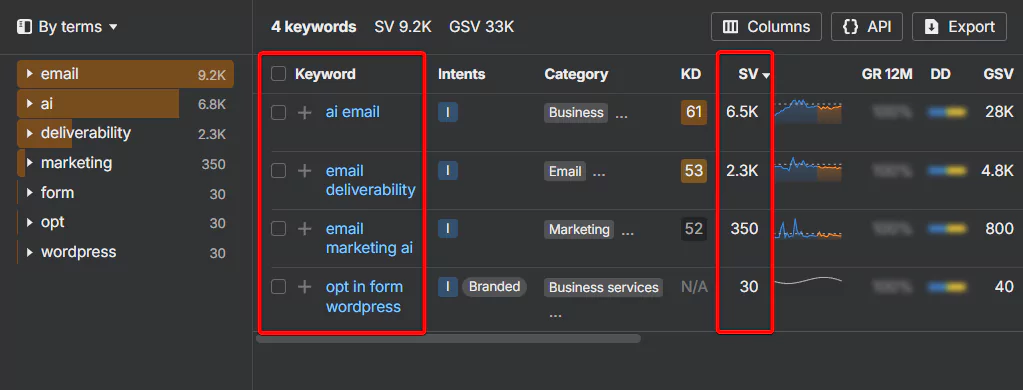
When your list of topics is ready, add them to an SEO tool and look for search volumes. This is to validate if there’s a larger audience ready to engage with these topics.
Finally, put the topics in a content calendar with publication dates.
Once you begin writing for your blog, the initial excitement for the project will start to wane. The calendar counters that ensuring consistent publication.
Start slowly. Aim to publish at least once a week at the beginning to build momentum and avoid burning out. Then increase frequency based on how much you can realistically write.
Use the calendar to plan a month ahead so you don’t end up abandoning the project.
Step 3: Get a WordPress Website Up and Running
Now that you have a content plan in place, let’s create a blogging website.
Purchase a domain name and a hosting plan from a hosting company.
Choose the hosting provider wisely because it can affect your website’s speed, uptime, and traffic potential.
We recommend starting with affordable, reliable plans from Hostinger, Bluehost, and SiteGround.
You can move on to managed and cloud hosting, such as Flywheel, WP Engine, Cloudways, and Kinsta, once you start drawing more traffic and need better performance, security, and support.
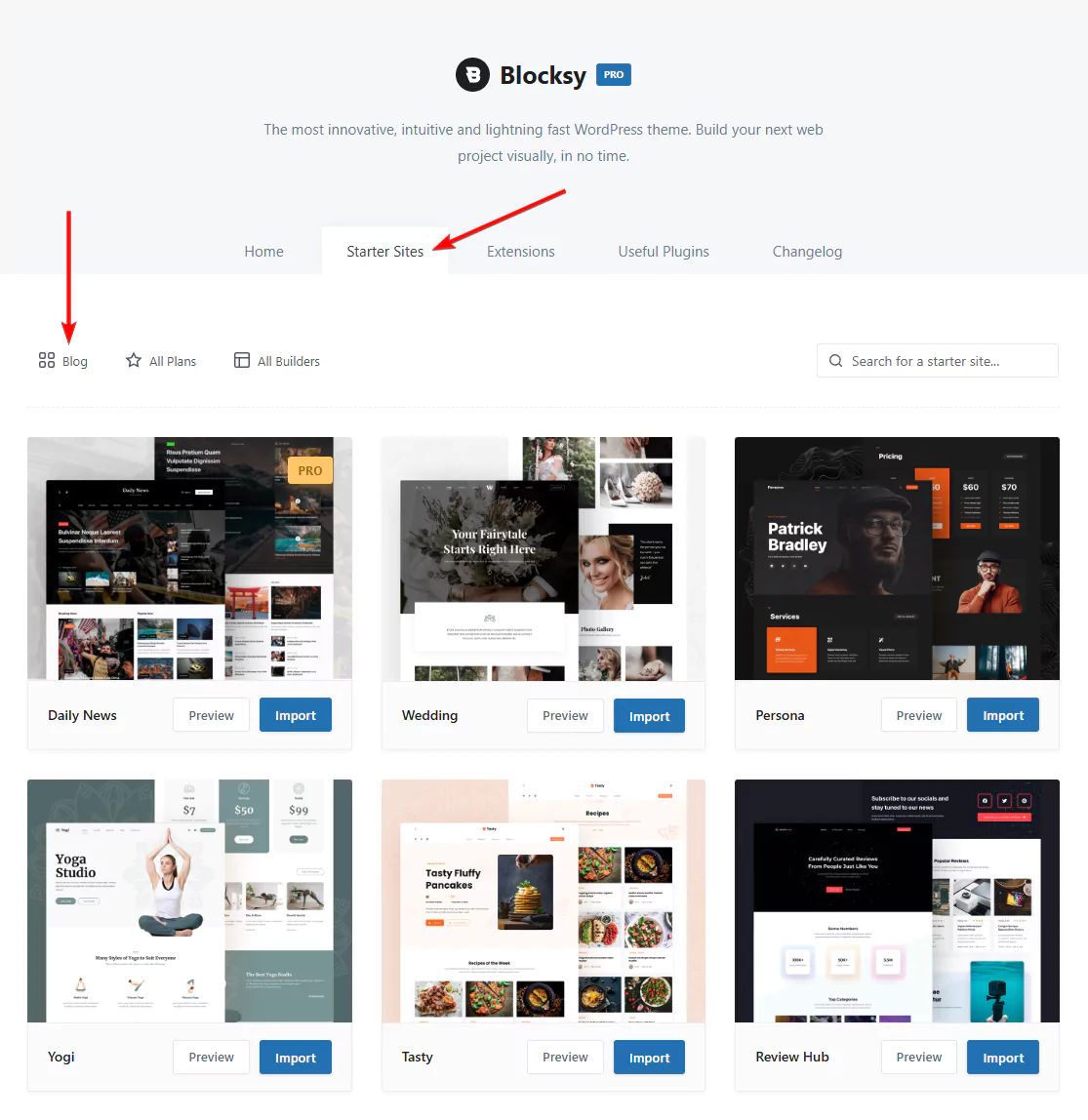
After your hosting is purchased, use a WordPress starter site to get a fully functional website online within minutes.
Step 4: Optimize Blog for Performance and User Experience (UX)
Choose a well-designed, lightweight WordPress theme (like Blocksy) – it’s the foundation of both your site’s speed and readability.
Your blog should load in under 1 second (realistically, 2 seconds) to ensure readers don’t get impatient and bounce off to a different blog.
On top of a lightweight theme, you can use a speed-boosting plugin, compress images on pages, and optimize third-party scripts – to improve page performance.
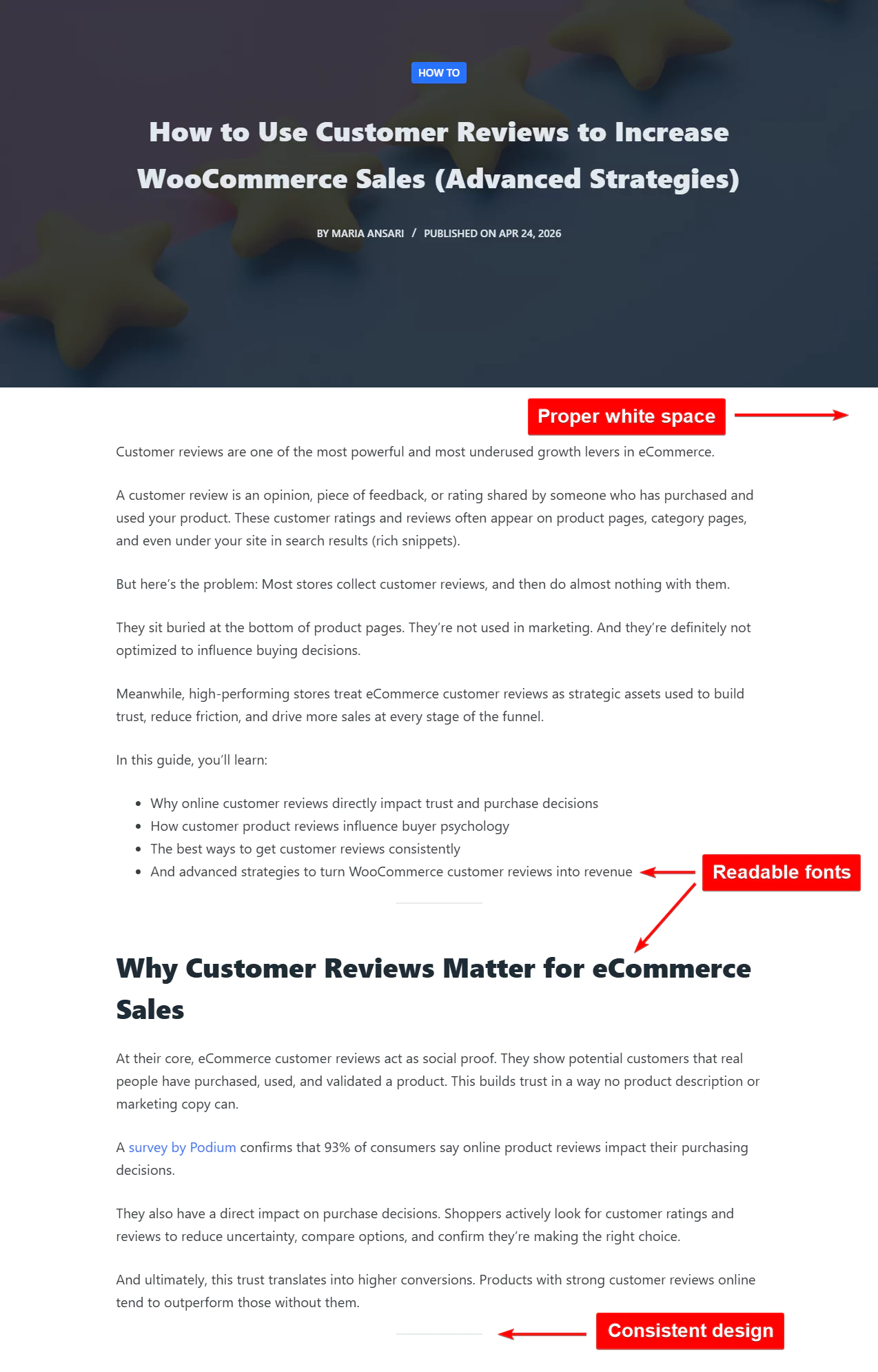
Once performance is taken care of, shift your focus to the blog’s user experience. How easy is it to read your pages? The layout of the page also determines how long someone spends on your website and whether they will return to read more of your content.
A thoughtfully designed WordPress theme handles this out of the box – proper whitespace, readable fonts, consistent design patterns, etc. are built in so you don’t have to worry about improving user experience from scratch.
Step 5: Focus on Doing Traditional and AI SEO Right
Optimize all your blog pages so that search engines and AI chatbots can access and extract your content and display it to their users. It increases your blog’s chance of being discovered online.
Traditional search engine optimization (SEO) includes on-page improvements to title tags, meta descriptions, images, slugs, internal linking, and most importantly, addressing user search intent in content. It also includes off-page activities such as social media marketing, influencer marketing, and building/attracting backlinks.
All of this is to signal to search engines like Google, Bing, and Yahoo that your site is credible and worth displaying in the search results.
AI-powered search tools like ChatGPT, Claude, and Perplexity follow a similar logic, but with a key difference: they place far greater weight on off-site signals.
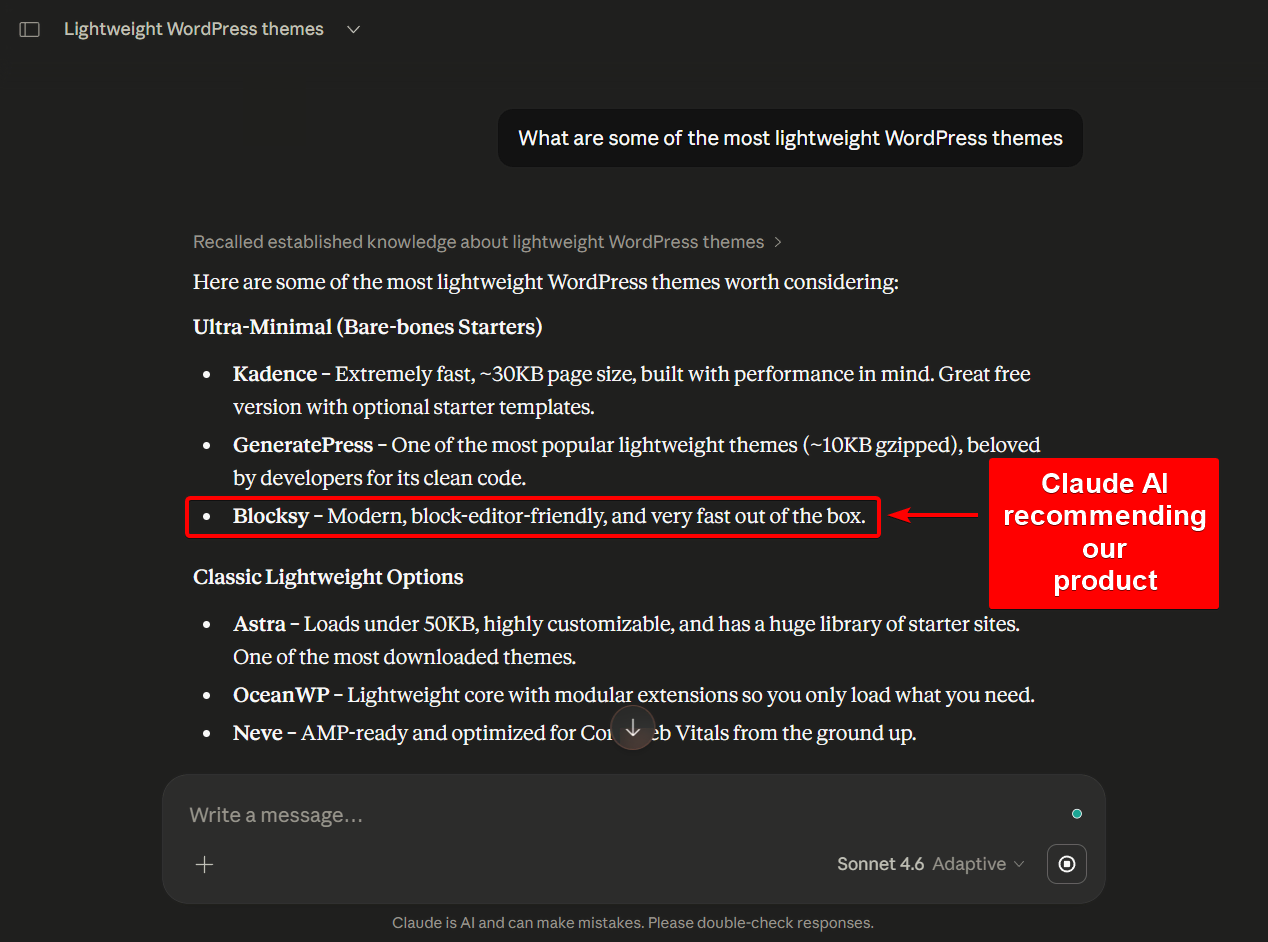
They look at who’s talking about you, linking to you, and mentioning you online – everything is accessed to gauge your website’s credibility and authority.
So, Artificial Intelligence Optimization (AIO) is more about building your reputation through reviews, community participation, citations, and backlinks, while also ensuring your website is accessible to AI crawlers so they can easily parse your content.

Jeremy Moser, CEO at uSERP, put it this way:
“AI engines only pull from your site 8% of the time when recommending you. Meaning 92% of the time, an LLM like ChatGPT gives a brand/product/solution recommendation, they are pulling from other websites that mention and discuss the topic. If your strategy for both SEO and AI search does not include link building, PR, and brand building, you are going to see poor results.”
Step 6: Track Progress and Make Adjustments
Tracking traffic and engagement level allows you to figure out what’s working – what’s actually bringing traffic to your blog and sustaining reader interest.
Armed with accurate data, you can double down on efforts that deliver results and halt activities that aren’t as impactful.

Kristiyan Yankov, Co-Founder of Above Apex, says:
“Winning blogs learn fast. They update content, test titles, improve structure, and keep refining based on what ranks and what does not. Losing blogs just publish and move on.”
Don’t be that blog! Add analytics to your website.
Google Analytics, Independent Analytics, and Plausible Analytics are among the most popular options.
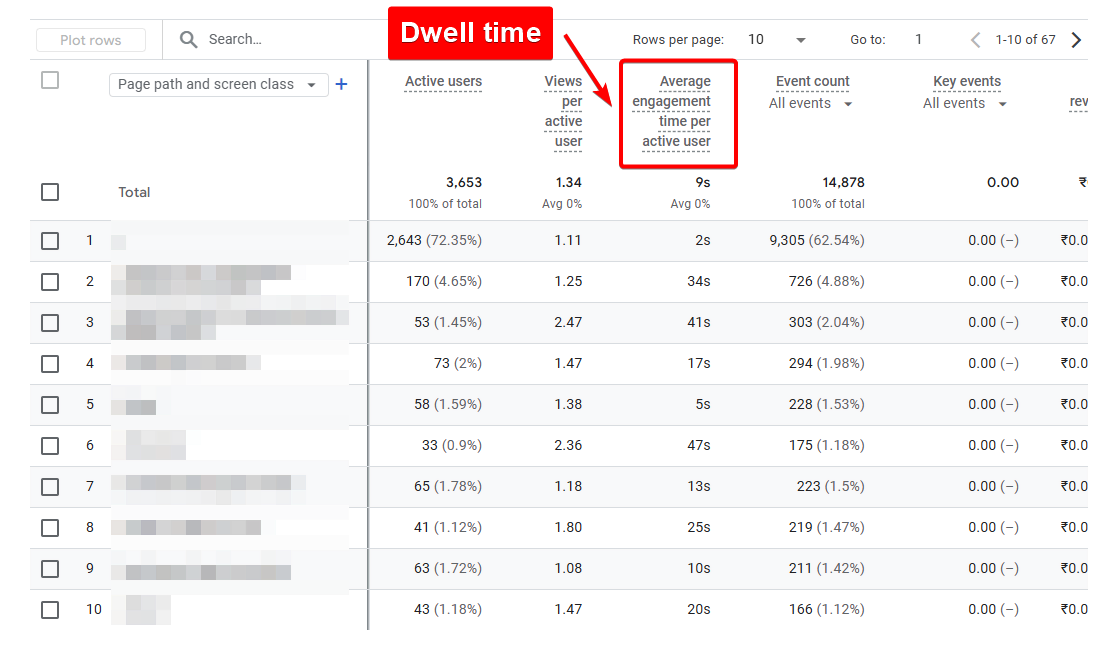
These tools track traffic, dwell time, and returning visitors – everything you need to know whether your content is working.
Set up the analytics once, measure progress each month, and adjust your strategy based on the data.
Blog Consistently Until You Find Success
Blogging is not easy. It requires a lot of upfront investment – of time, effort, and money – before you can see any meaningful result.
Even with consistent publication, it takes a while (likely over a year) for search engines to recognize your blog as credible and recommend your content to their users.
Most people quit way before that happens – right before the compounding effect kicks in.
Don’t be like most people.
Start today – publish your first post this week.