| 100 Client websites running on Blocksy | 3 to 5 days To launch author sites with Blocksy and Toolset | Since 2020 Outcome Labs has built client sites on Blocksy |
“I’ve never had consistent, reliable support the way the [Blocksy] team does it. Not only is it responsive, it’s accurate.”
—John Fleming, Outcome Labs owner.
Every client website Outcome Labs built meant another custom theme the agency needed to create and maintain. John Fleming (Outcome Labs owner) didn’t want his agency to become a “theme company”—yet that’s where it was headed!
Outcome Labs launched in 2008 and offered development services to startups and big brands like Disney, Pepperidge Farm, and Wilson Sporting Goods.
It used WordPress to meet clients’ content management needs and began building custom themes as a workaround to heavy page builders.
But one-off themes come at a cost!

“Building one-on-one themes for clients, just, you know, it took away the kind of the core value of WordPress, right? Instead of having a product that was literally installed in thousands or hundreds of thousands of sites, and would evolve at that pace, and could scale at that pace, everything was a one-off. And even if you built it, well, architecturally, that was hard.”—John Fleming.
Outcome Labs needed a foundation that evolved with the WordPress core, one that didn’t need hands-on building and maintenance for every client. They found it in Blocksy—a promising new block-based theme.
Nearly 7 years later, Outcome Labs runs about 100 of its client websites on Blocksy—without having to build a custom theme for each one.
Why Outcome Labs Kept Working Around Its Tech Stack
Outcome Labs was building WordPress websites for clients, and evolving client needs meant creating and maintaining multiple one-off custom themes—hard to sustain. Commercial themes and page builders seemed like the fix, but each one caused more problems: slow sites, poor Gutenberg integration, and disruptive tool upgrades.
As page builders started emerging, the agency adopted a popular page builder. It helped create professional front-end designs fast. But the elaborate page designs made large websites heavy and slow.
Next, the agency adopted a popular theme. It offered several useful features for building client websites. But as the block editor rolled into WordPress core, the theme’s early versions didn’t fully integrate with it.
“The big issue I had with it (the popular theme) was, in the early iterations, it never really integrated into Gutenberg. Like, yeah, like you had to set your colors separately. And they didn’t integrate with the color settings in Gutenberg. Like, there was a lot of stuff that was kind of off that you had to work around.
So, even though I liked how they had architected the theme, you know, the team had done a pretty good job. And were adding stuff. But there were just a lot of gaps. And it was like, I couldn’t really figure out why.”—John Fleming.
To work around the gaps in the theme, the agency adopted a popular block plugin. It solved the integration issue and gave the team a smoother workflow. But the plugin turned unreliable, making significant architectural changes during three major upgrades. This led to heavy rebuilds on client websites.
Needless to say, John was once again on the quest to find a good foundation for his client websites. That’s when he stumbled upon the Blocksy theme.
Betting on a New Block Theme & Deciding to Stick With It
Blocksy (a fairly new block theme) won John over because it integrated deeply with the block editor, treated WordPress as a platform for building serious websites, and came from developers who were very open to feedback and agile with support.
John found Blocksy just before its 1.0 release and immediately saw how well it understood the Gutenberg editor.
“These guys get it. Yeah, they integrated the palette, the Gutenberg palette, right, with the theme. So when you set the colors, you set them once, and they’re set everywhere, man, it’s a stupid thing. But it was like such an annoying thing that you could do that to something.”—John Fleming.
At first, John was reluctant to bet on a new theme since it’s hard to tell whether a theme will last. But a few key discoveries while testing Blocksy changed his mind: the theme developers set up a Slack channel early on and were very open to feedback; the theme supported custom post types natively, which meant Outcome Labs’ team didn’t have to build its own templates; and Blocksy was shipping regular releases, which meant that the theme was constantly improving and adding new features.
“They weren’t trying to just, hey, here’s the fancy blogging platform! And they weren’t, they weren’t all that concerned—to me, the previous page builder guys had gone too far on the design side. Trying to create everything about, look at all the cool design things you could do. (With Blocksy) It was like, if you’re trying to build applications, it was there (like a reliable foundation).”—John Fleming.
For a proper test run, John first moved his personal site (johncharlesfleming.com) and then his agency website (outcomelabs.com) to Blocksy. After that, new client websites were built on Blocksy, and eventually, most of the old client websites moved to Blocksy.
John was one of the first customers who bet on Blocksy and bought corporate licenses. He has used Blocksy since early 2020 and cites Blocksy’s super-responsive support and well-planned upgrades as the reasons for his continued preference for the theme.
“Each move, even I can say the 1.0 to 2.0 move, which was a big move, was pretty smooth. We did it; it was prepped well ahead of time, they thought through the issues, and we had plenty of time to practice it. And the team was very good at taking input from people who were using it.”—John Fleming.
From a Kidney Foundation to a Bestselling Author: 100 Sites on Blocksy
Outcome Labs has about 100 client websites running on the Blocksy theme, and the projects vary widely—from event management and fundraising to book catalogs and online courses.
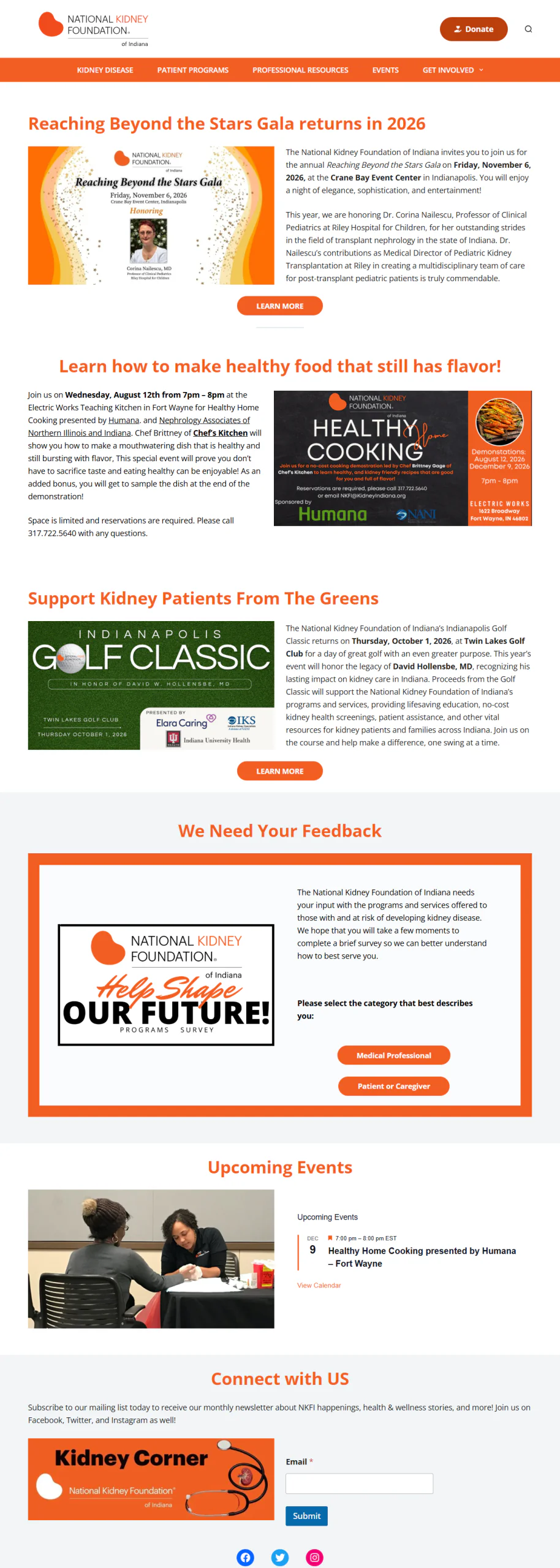
National Kidney Foundation of Indiana (NKFI), a nonprofit organization founded in 1970, had a website that couldn’t handle event management and ticketing. The site’s content was outdated.
The new website had to reflect the national brand (National Kidney Foundation—NKF), and the Indiana team needed control over its local events, fundraising program, and content.
Outcome Labs built one new site that combines the chapter’s public website, fundraising, event management, and promotion of its summer camp for kids with kidney disease.
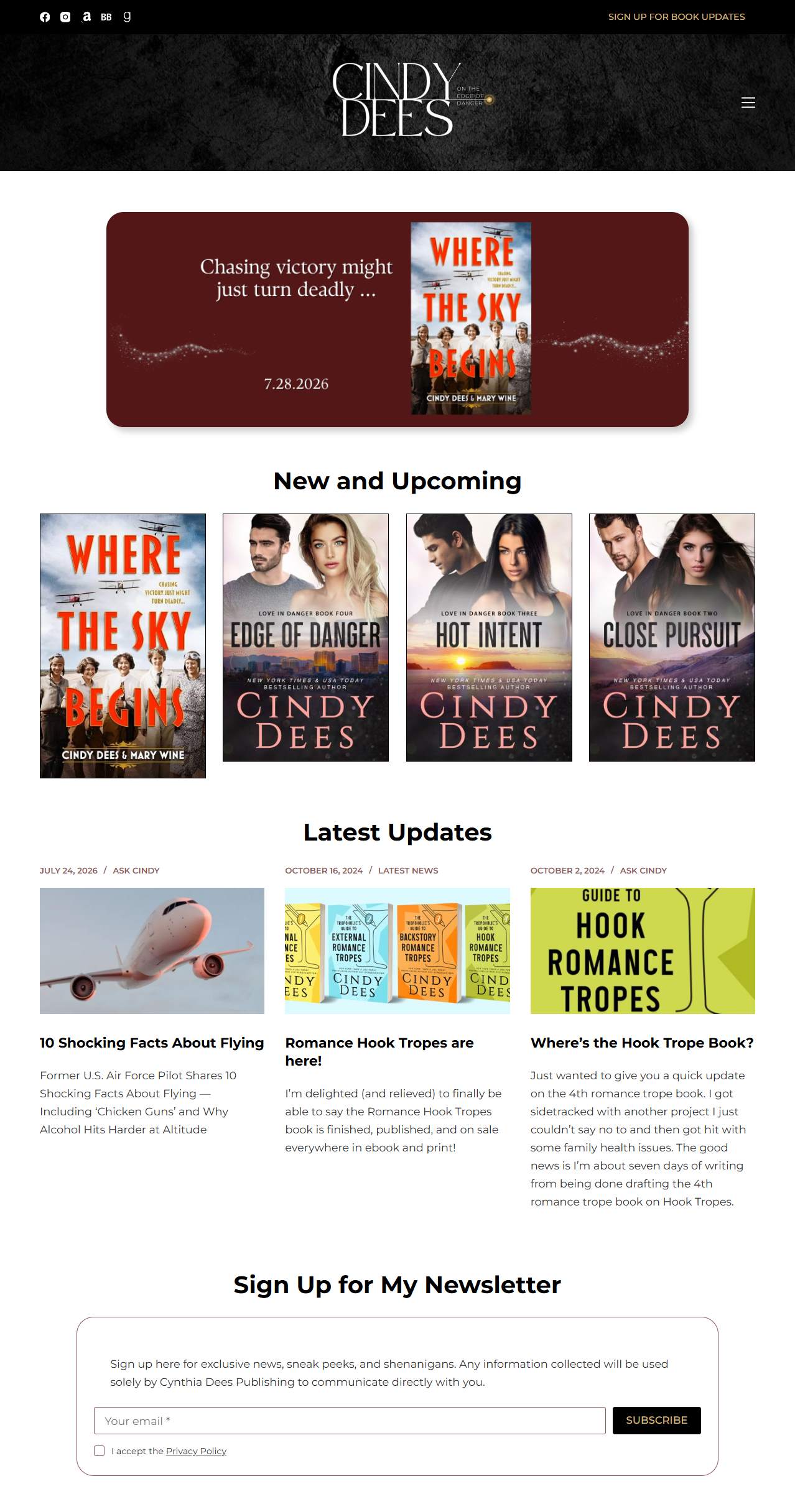
Cindy Dees, a New York Times and USA Today bestselling author, needed to organize her books digitally for readers to browse them easily. A catalog was required that connected books to their editions and to the book series they belonged to.
Outcome Labs used the Blocksy theme and the Toolset plugin to build Cindy’s websites (cindydees.com and cynthiadees.com) and catalogs. Blocksy’s standard layouts created simple pages, while Toolset handled the more complex layouts with its dynamic data controls.
The agency used this approach to build multiple author websites and can now get similar sites up and running within 3 to 5 days.
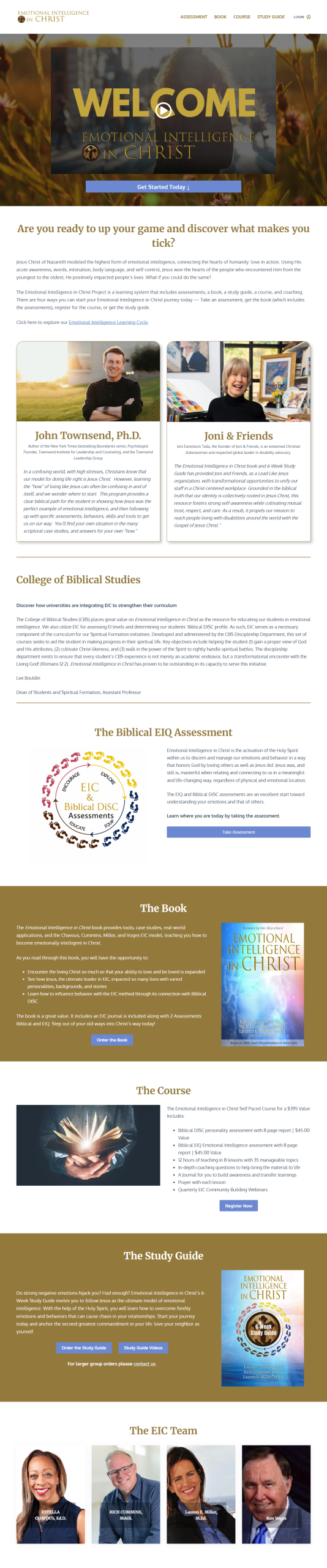
Emotional Intelligence in Christ is a faith-based personal development platform. The client needed a platform to promote and manage its courses.
Outcome Labs built the site on Blocksy and LearnDash. The theme handled the site’s design and layout and deeply integrated with LearnDash, the plugin that runs the courses.
Tired of building a custom theme for every client? Blocksy can be the foundation for your next client website.