



Blocksy gives you detailed control over the layout and presentation of individual blog posts. From the Single Posts panel, you can configure the post title area, content structure, featured image, sharing options, author information, navigation, related posts, comments and more.
To access these options, navigate to Customiser → Single Posts.
Quick Look
Granular Controls
Post Title
The Post Title section controls the hero area displayed at the top of individual blog posts.
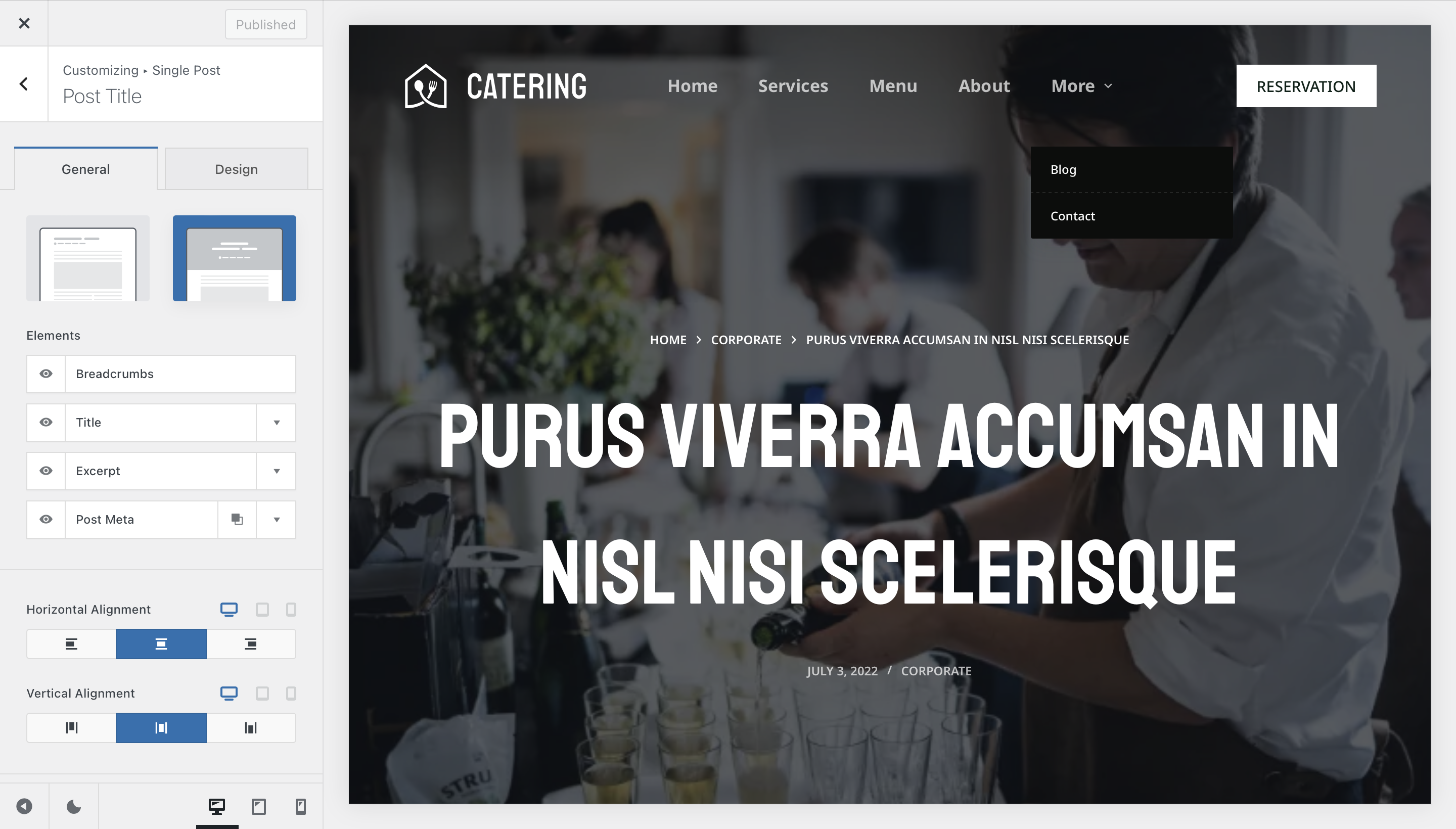
Two title layouts are available:
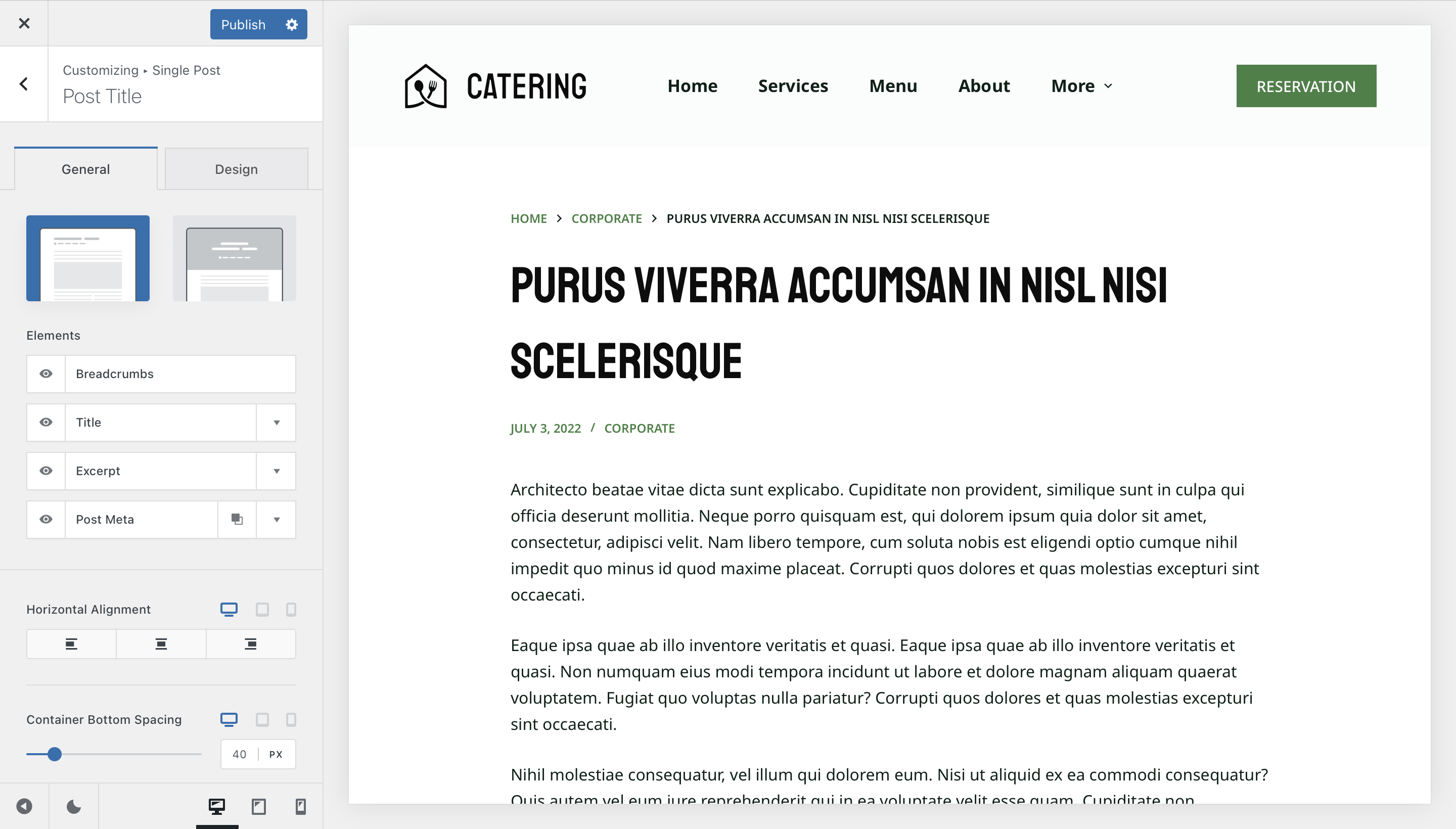
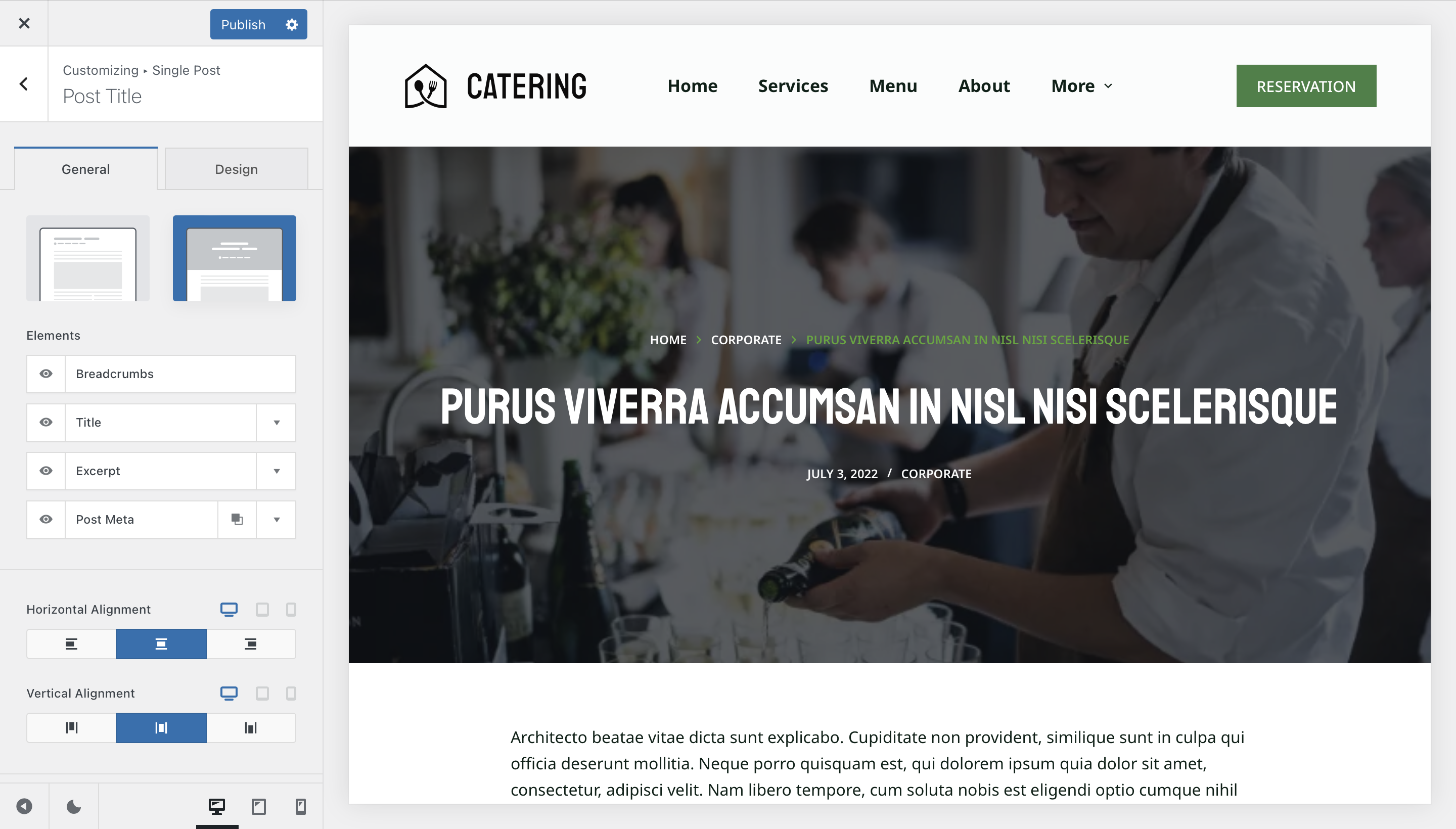
The Elements controls determine which information appears inside the title area:
- Title – displays the post title.
- Excerpt – displays the post excerpt.
- Breadcrumbs – displays the breadcrumb navigation trail when breadcrumbs are enabled.
- Post Meta – displays information such as the publication date, author, categories and other supported metadata.
Post Structure
The Post Structure setting determines the overall width and sidebar configuration of the post content.
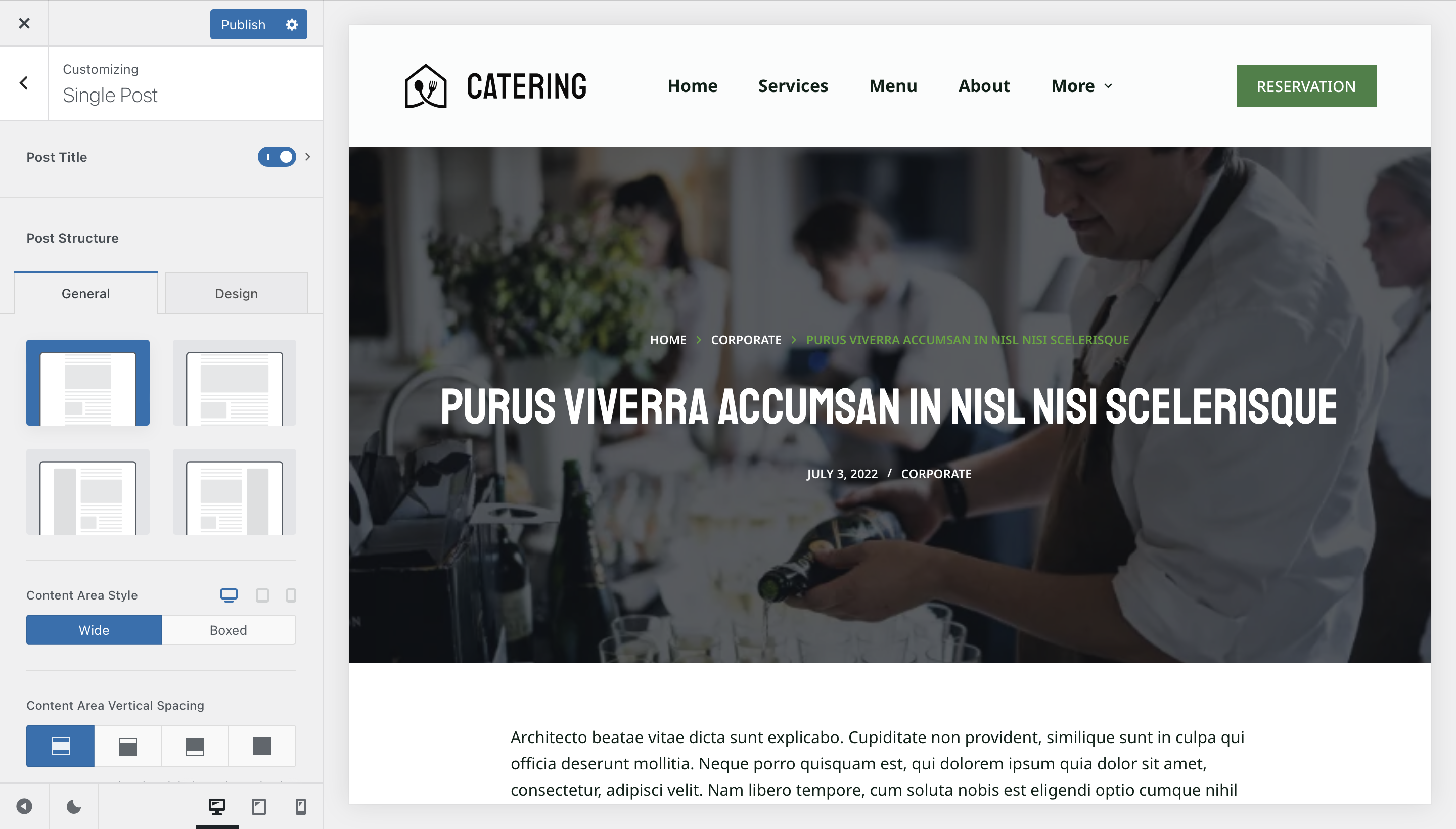
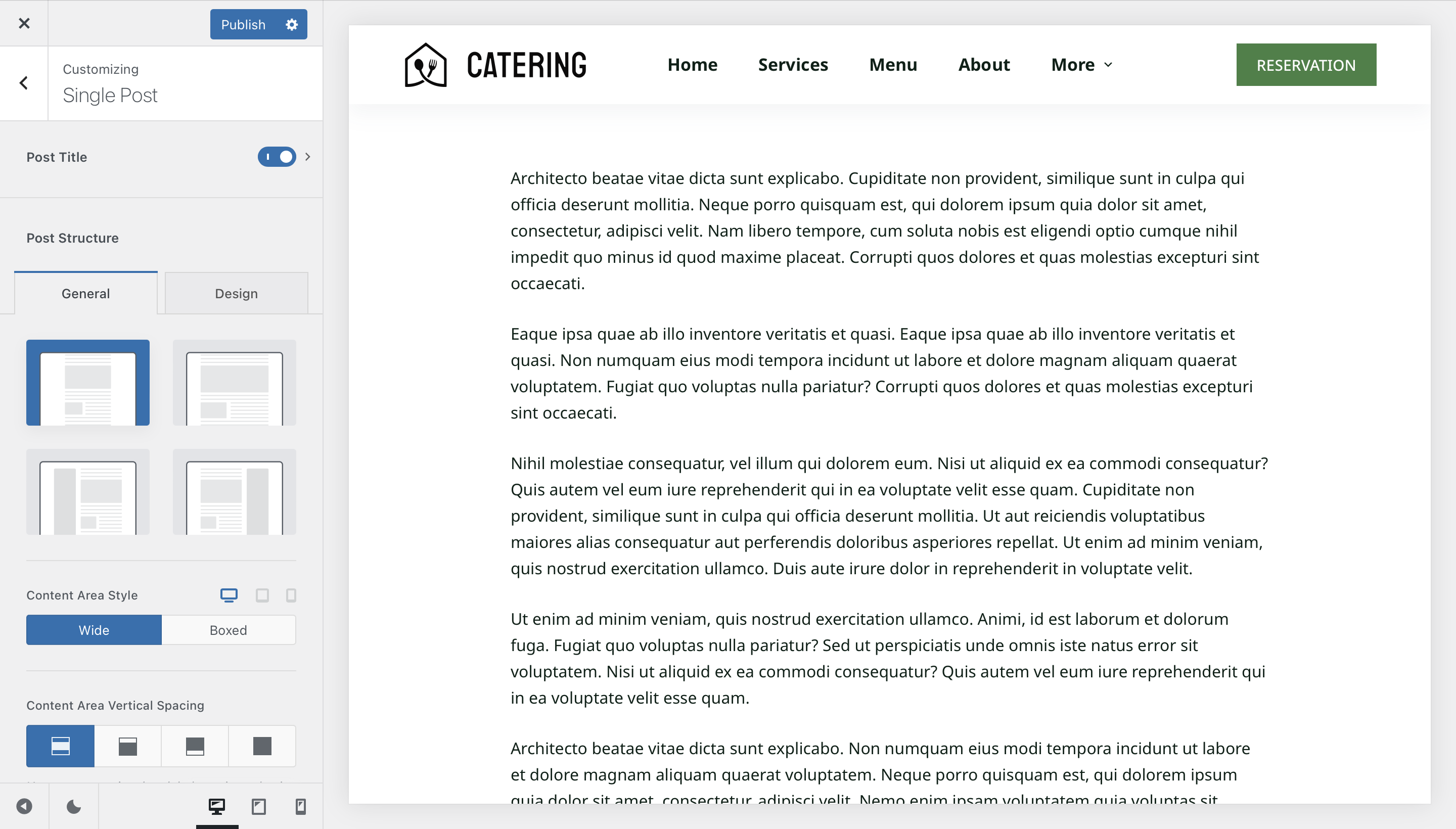
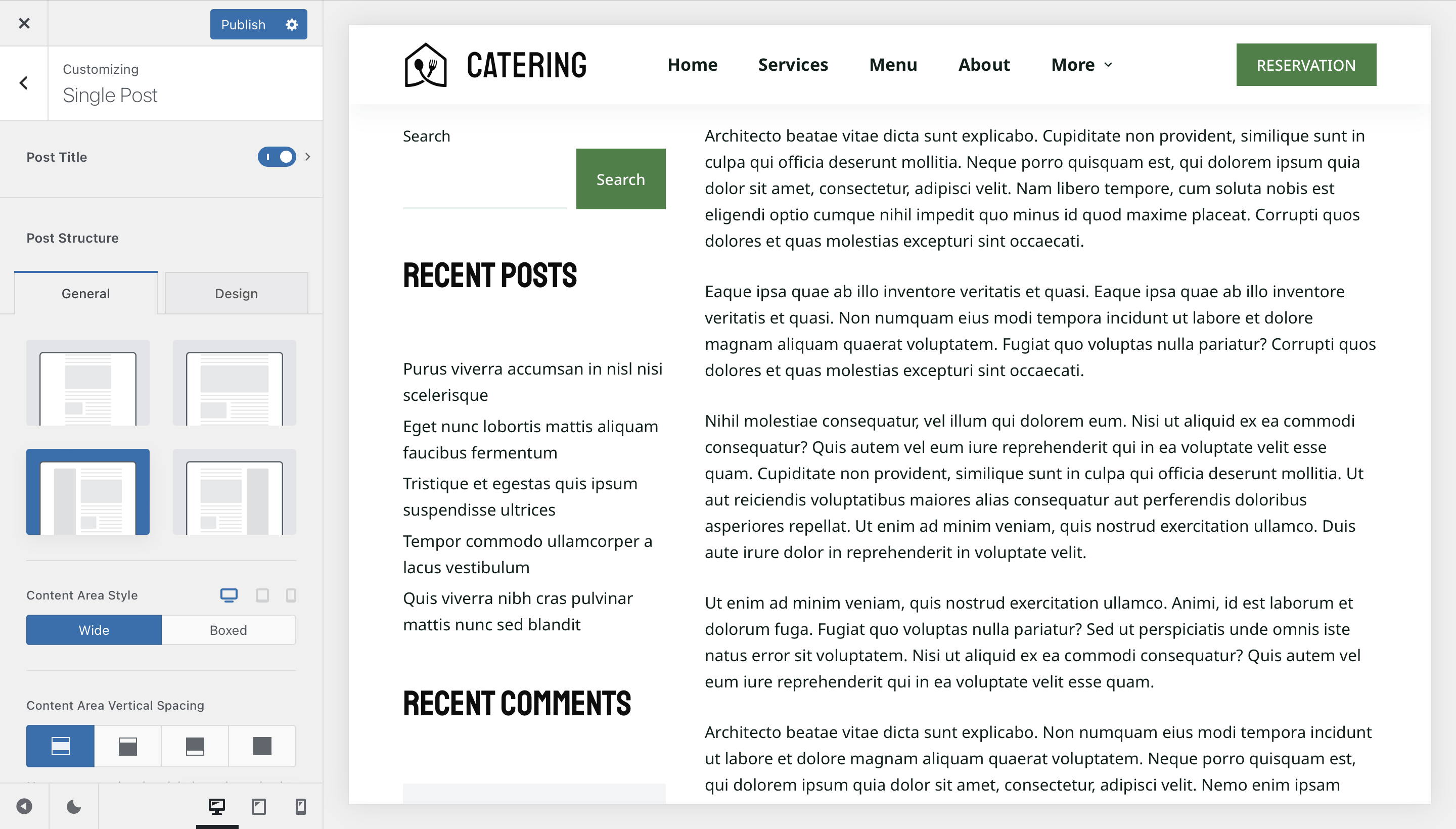
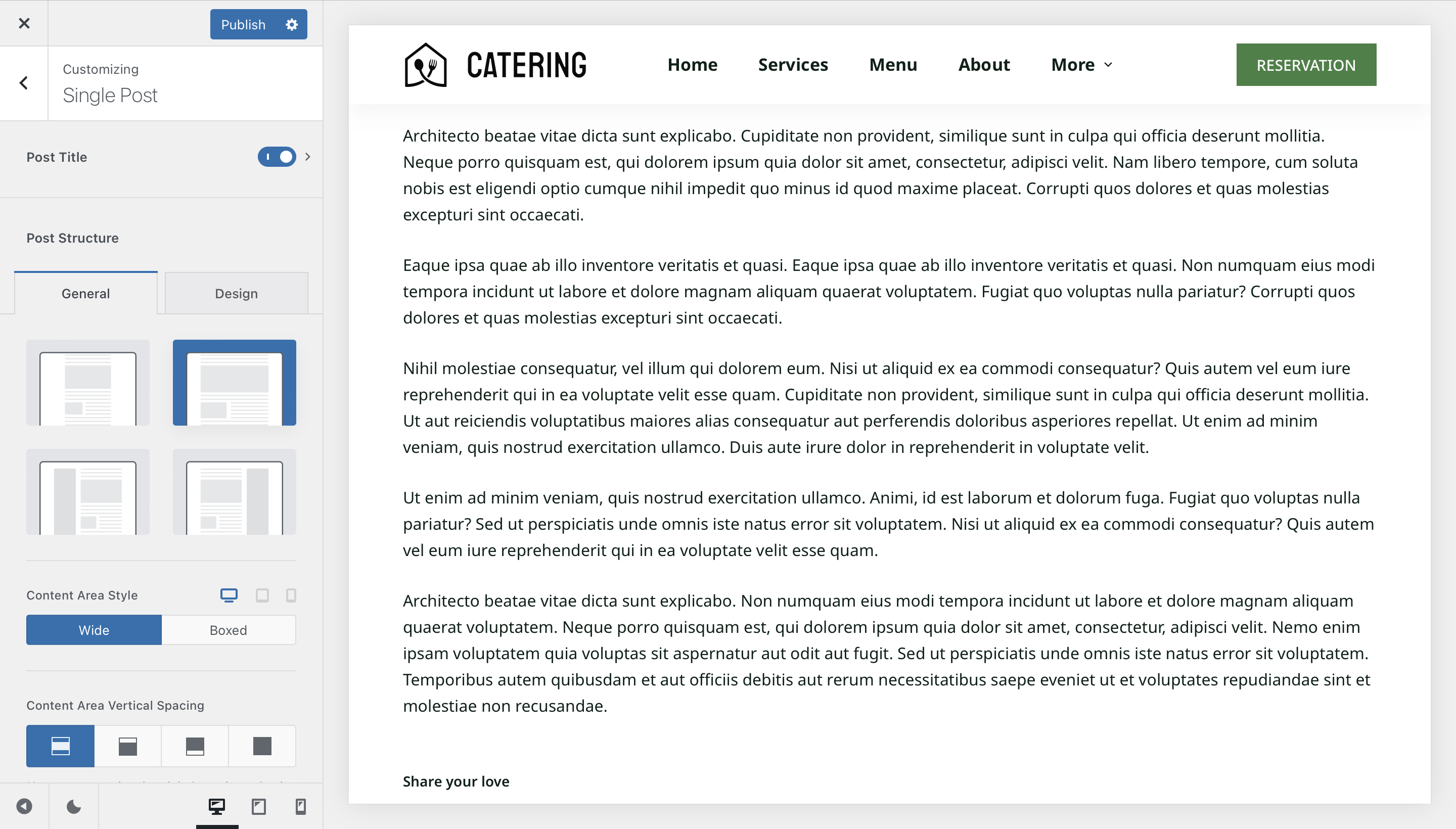
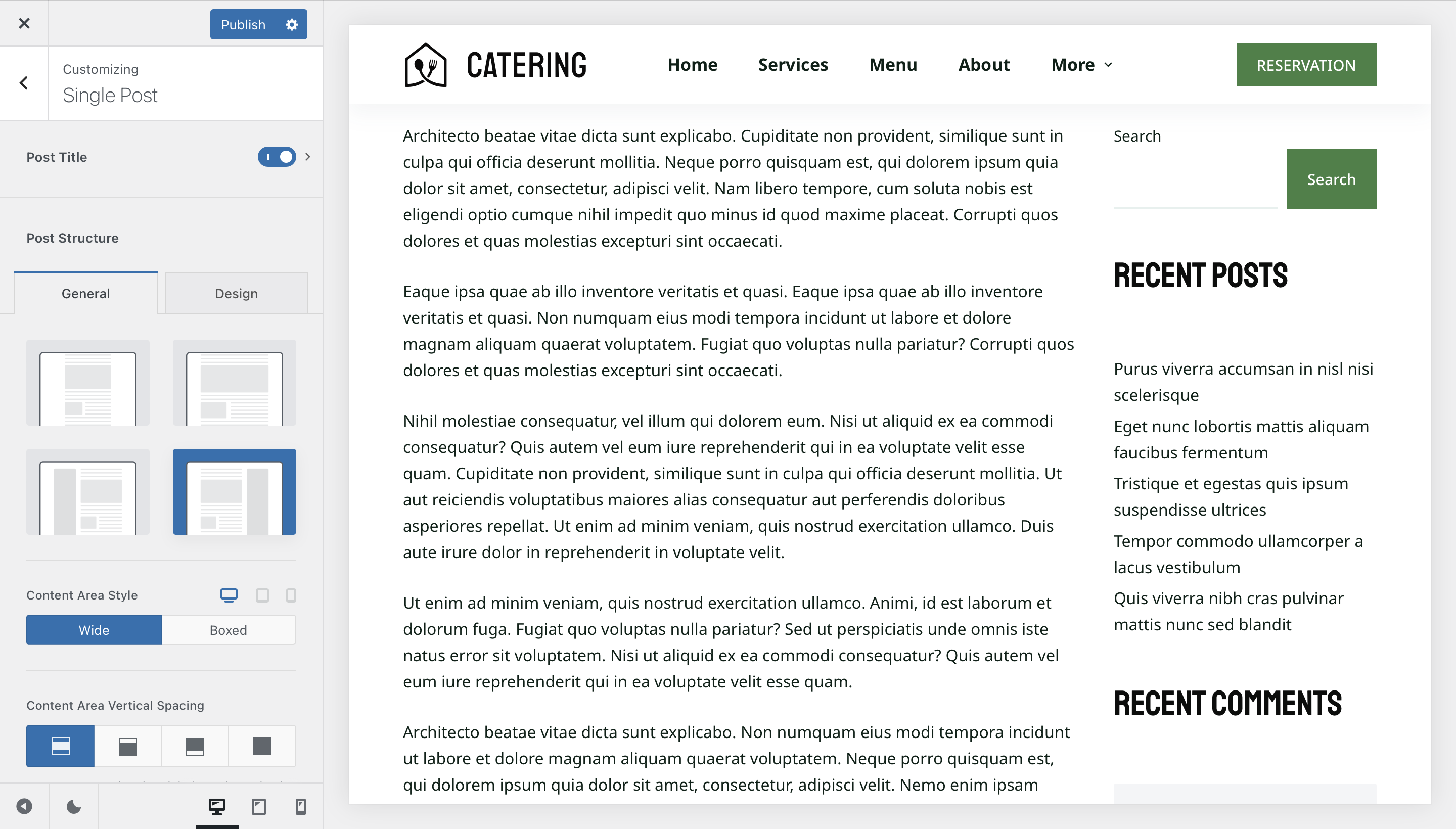
Content Area Style
The Content Area Style controls how the main post content is presented against the page background.
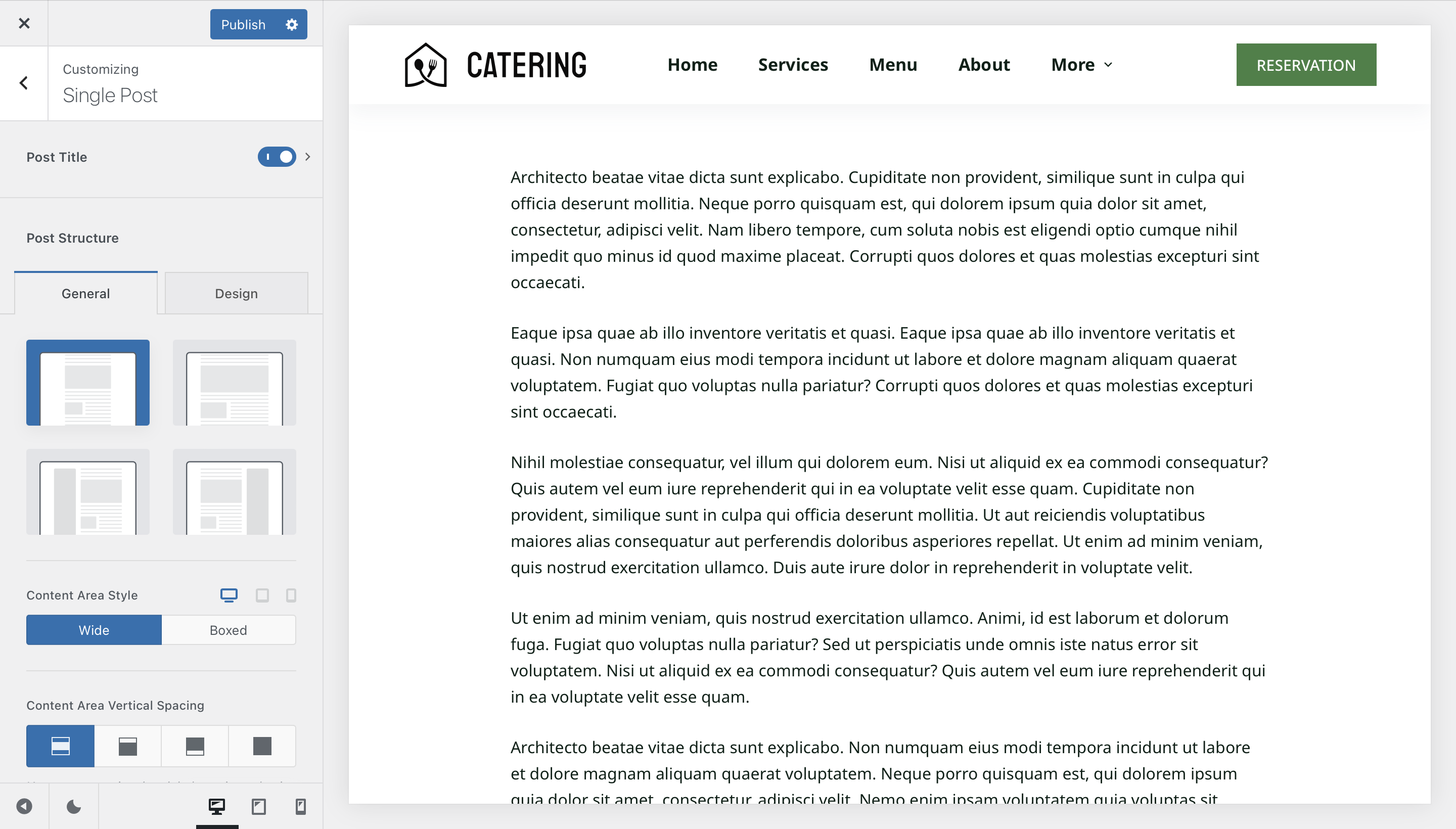
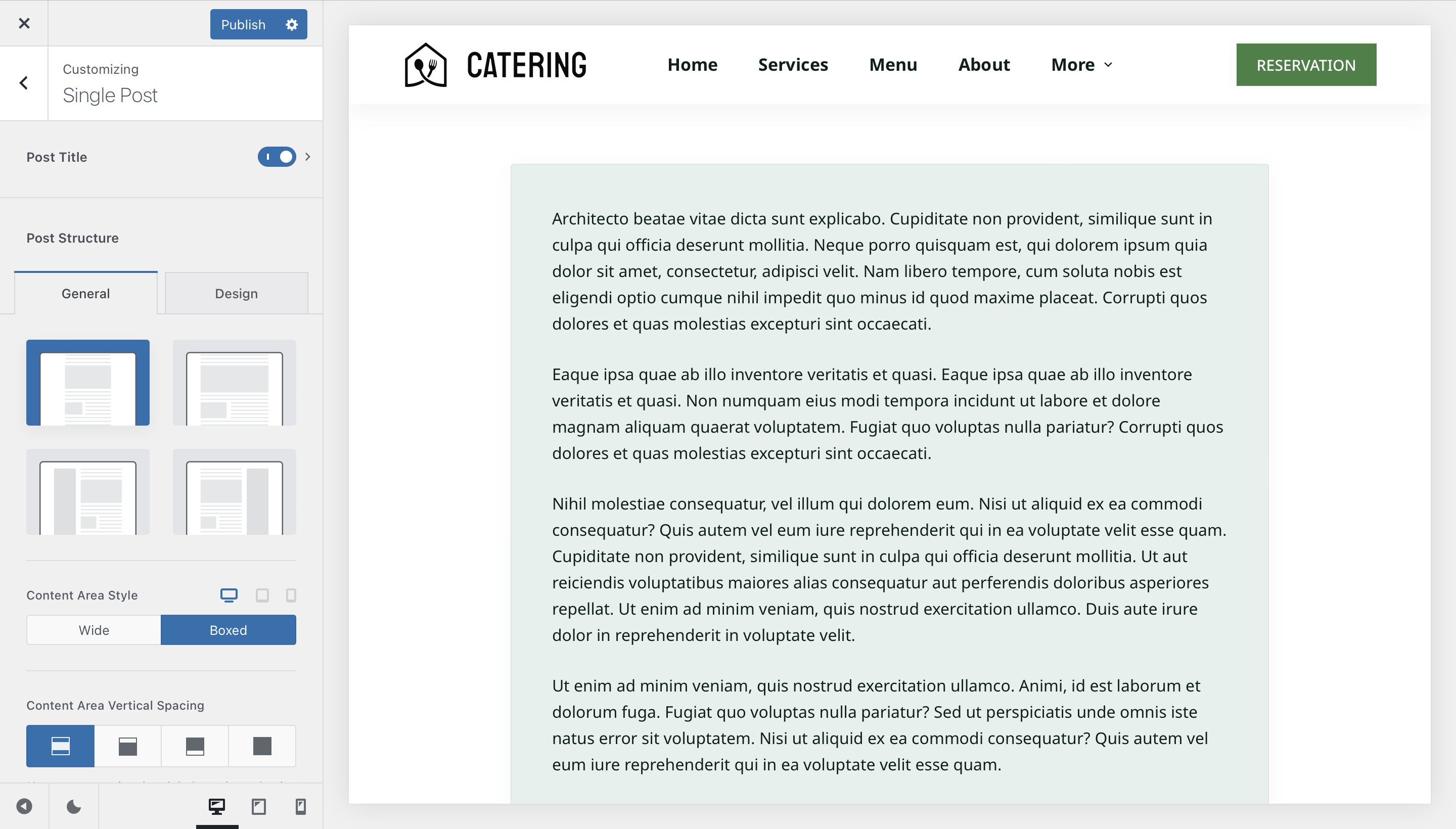
Content Area Vertical Spacing
The Content Area Vertical Spacing option controls the spacing between the post content and the surrounding header and footer areas.
The spacing value itself is configured under Customiser → General → Layout → Content Area Spacing.
Post & Page Elements
The Post & Page Elements section controls the additional modules displayed around the main post content. Each element can be enabled independently and provides its own configuration options.
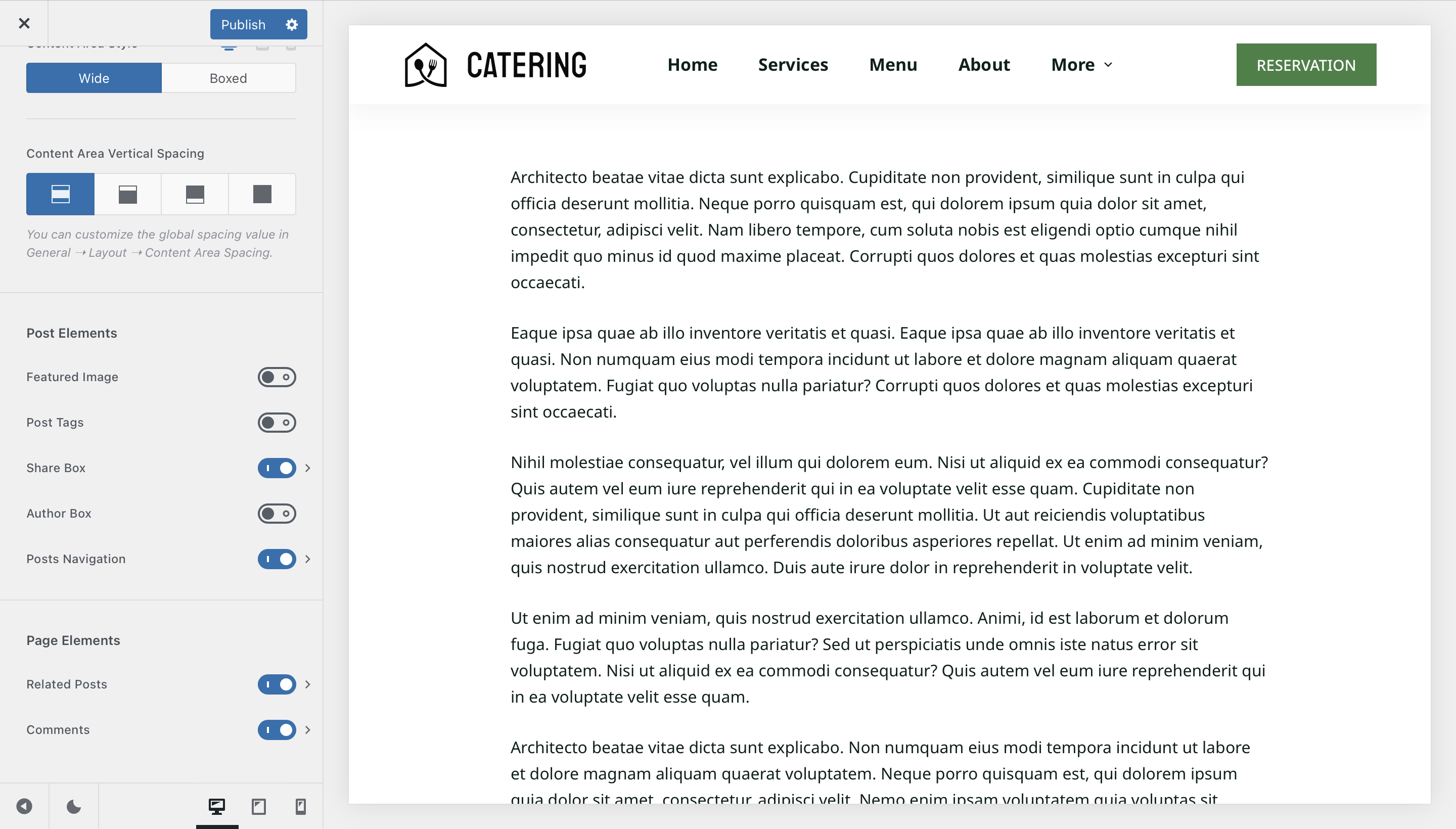
Featured Image
The Featured Image element controls how the post’s featured image is displayed on the single post page.
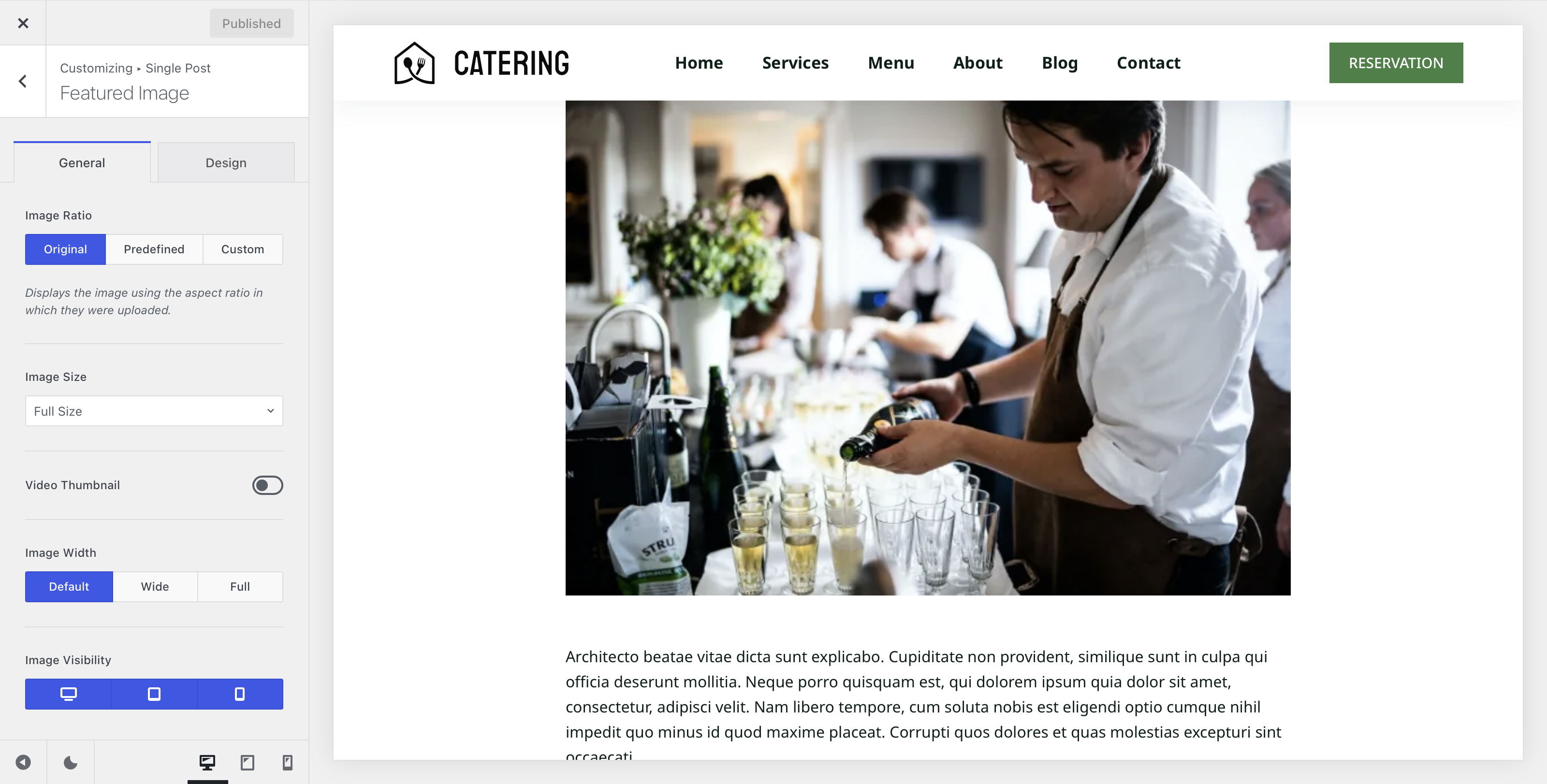
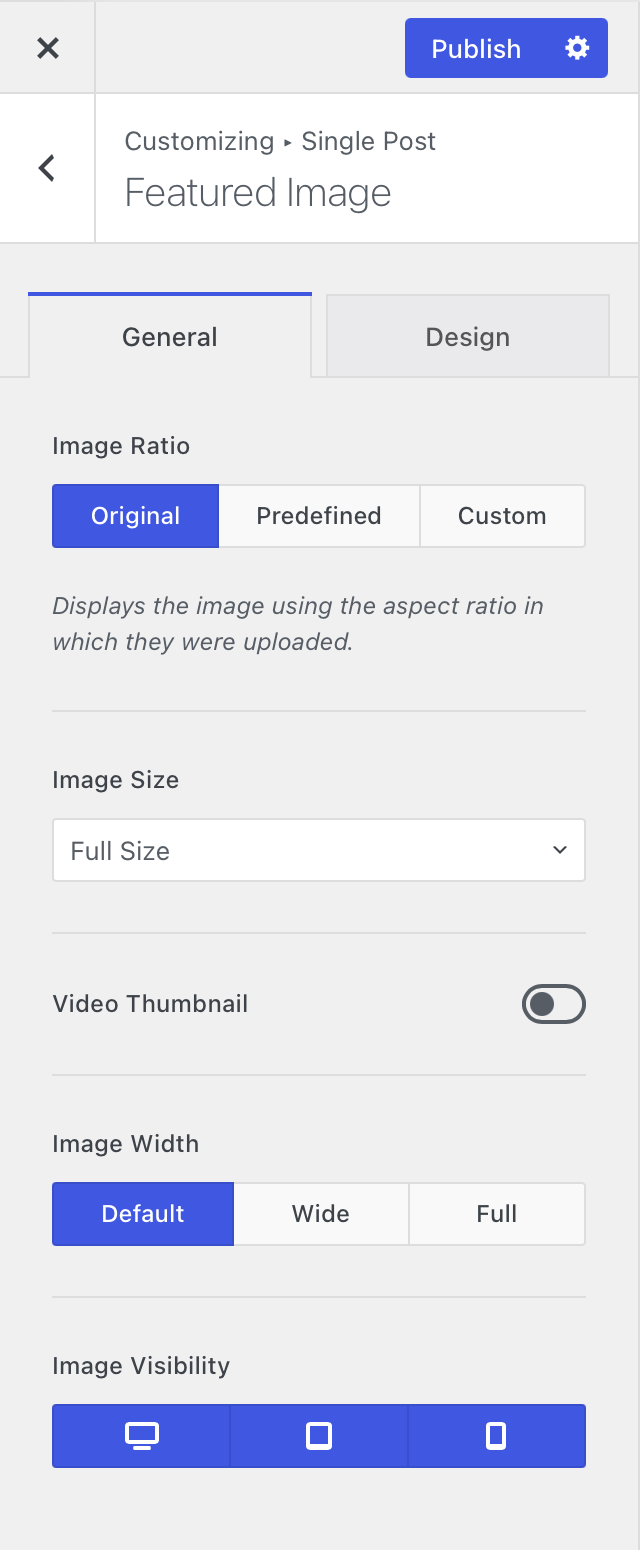
- Image Ratio – choose the original image ratio, select a predefined ratio or define a custom one.
- Image Size – selects the WordPress-generated image size that will be loaded. This controls the source image file rather than its physical size on the page.
- Video Thumbnail – enables the Featured Videos functionality, allowing Blocksy Pro users to display a video instead of the standard featured image.
- Image Width – choose whether the featured image follows the post width, extends beyond it or uses the available full width.
- Image Visibility – control whether the image appears on desktop, tablet and mobile devices.
Post Tags
The Post Tags element displays the tags assigned to the current post, giving readers a convenient way to explore other content associated with the same topics.
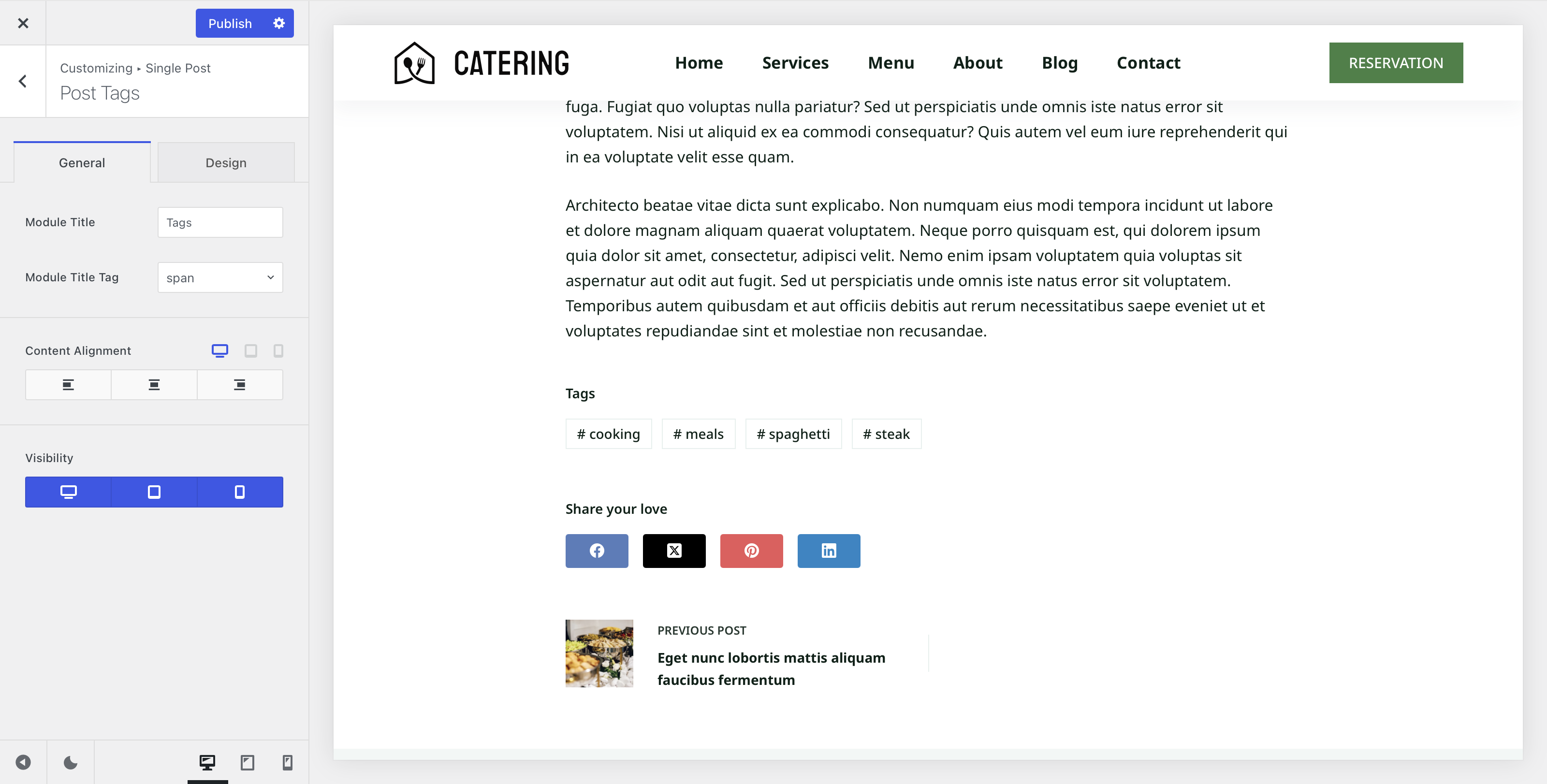
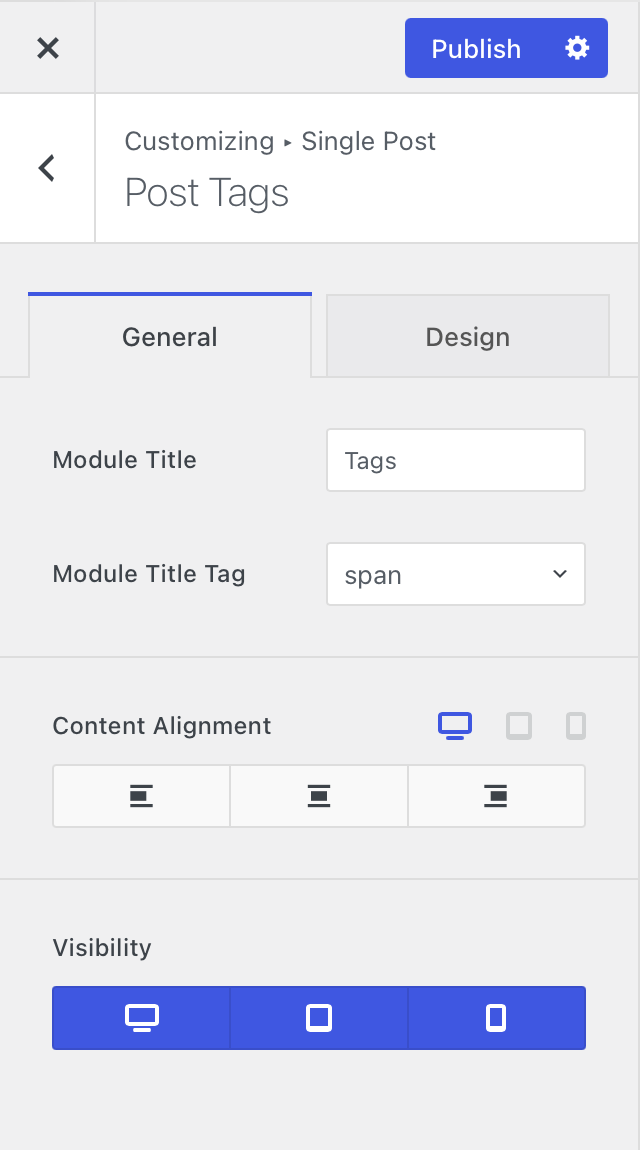
- Module Title – define the label displayed above the tags and select the HTML tag used for the title.
- Content Alignment – align the module to the left, centre or right.
- Visibility – control whether the module appears on desktop, tablet and mobile devices.
Share Box
The Share Box gives visitors direct links for sharing the current post through supported social networks and services.
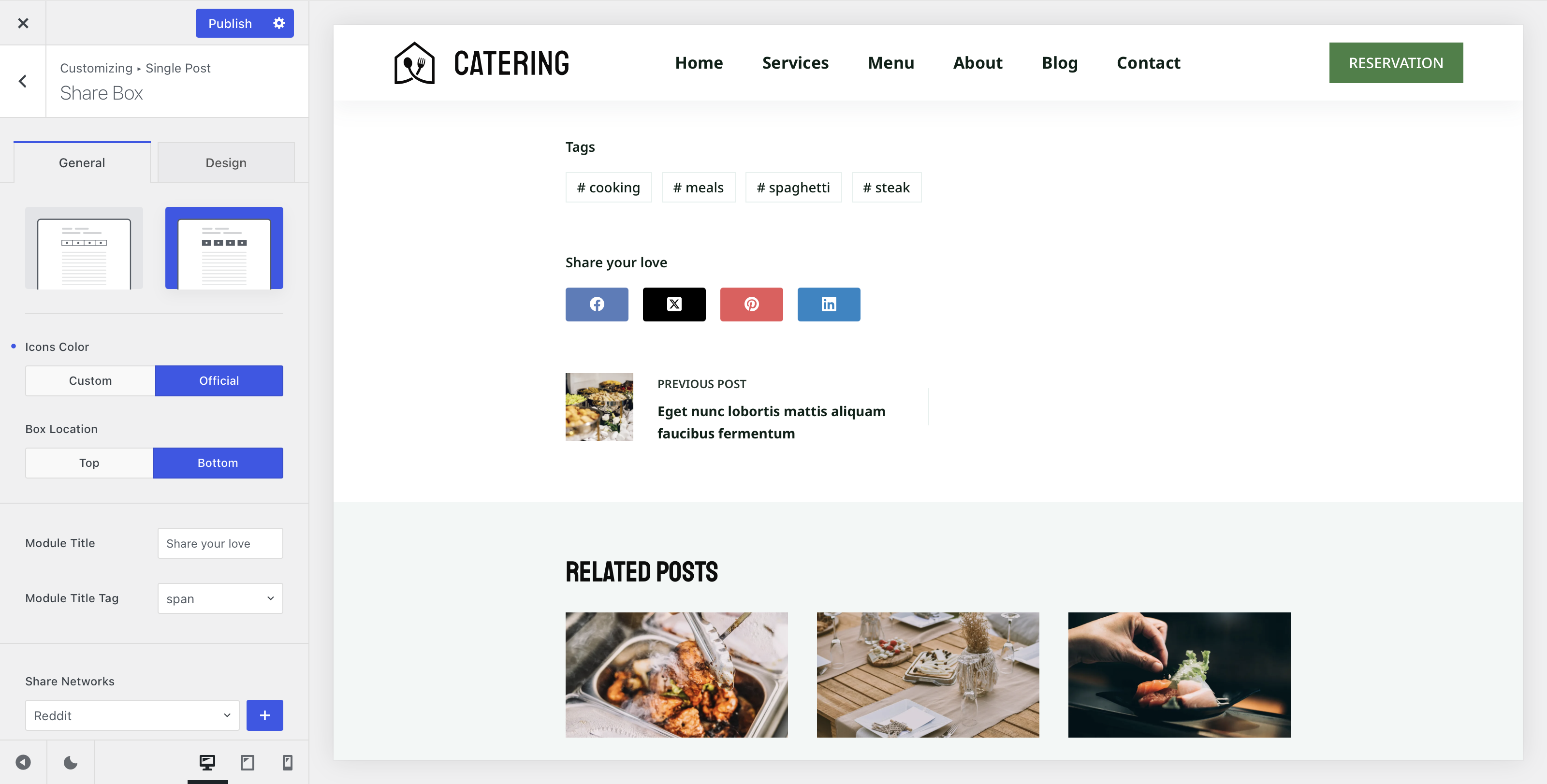

- Design – choose between Outlined and Filled button styles.
- Icon Colours – when using the Filled design, use one custom colour or the individual network brand colours.
- Box Location – display the module above the post content, below it or in both locations.
- Module Title – set the Share Box label and choose the HTML tag used to render it.
- Share Networks – choose which sharing destinations are available to visitors.
- Tooltip – display the network name when a visitor hovers over an icon.
- Link Nofollow – optionally add the
nofollowattribute to generated sharing links. - Icon Size Controls – adjust the size and visual proportions of the sharing icons.
- Alignment Options – control the alignment of the module within the post.
- Visibility – control whether the Share Box appears on desktop, tablet and mobile devices.
Author Box
The Author Box presents information about the post author, including their avatar, name, biography and supported social links.
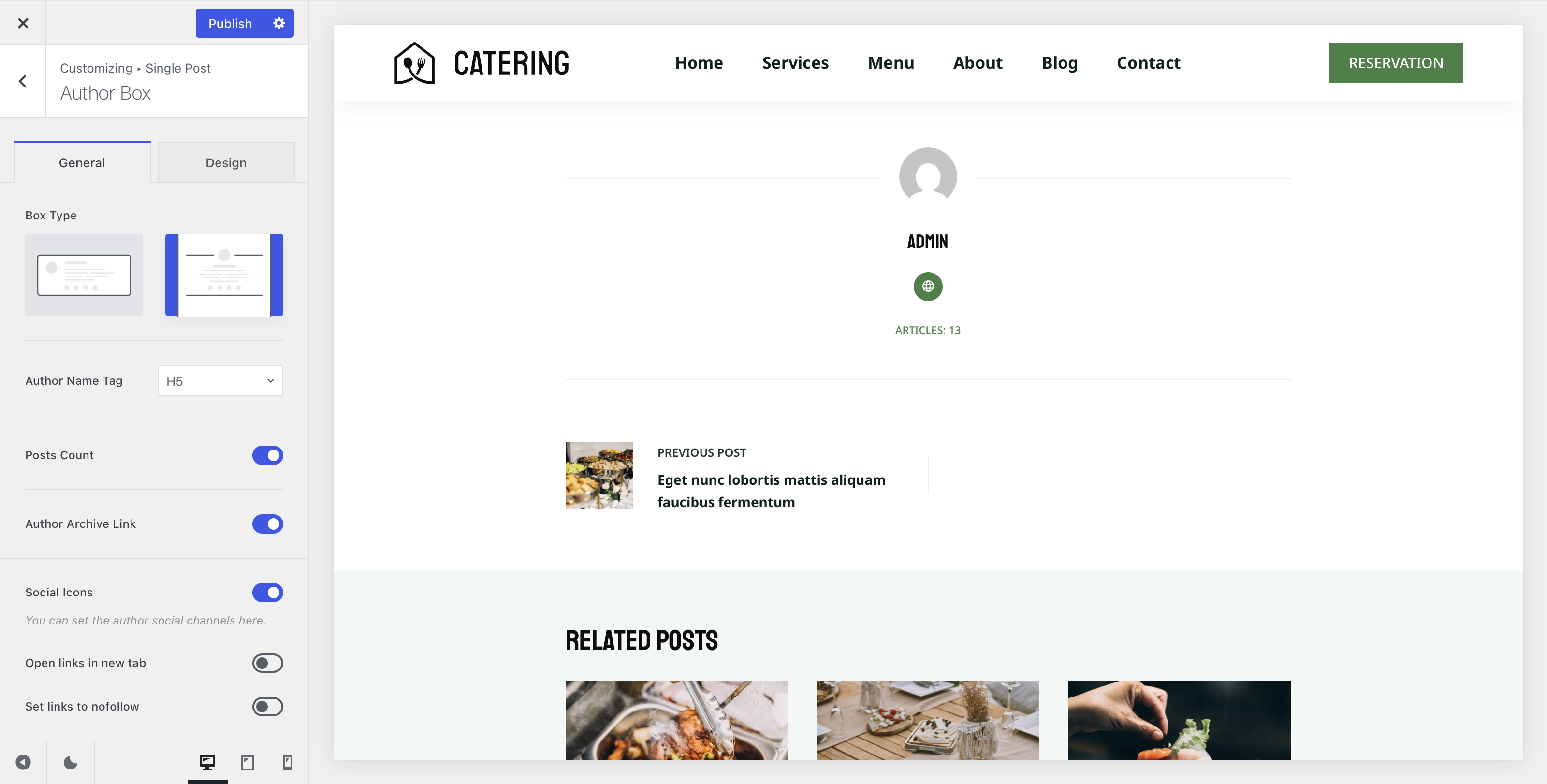
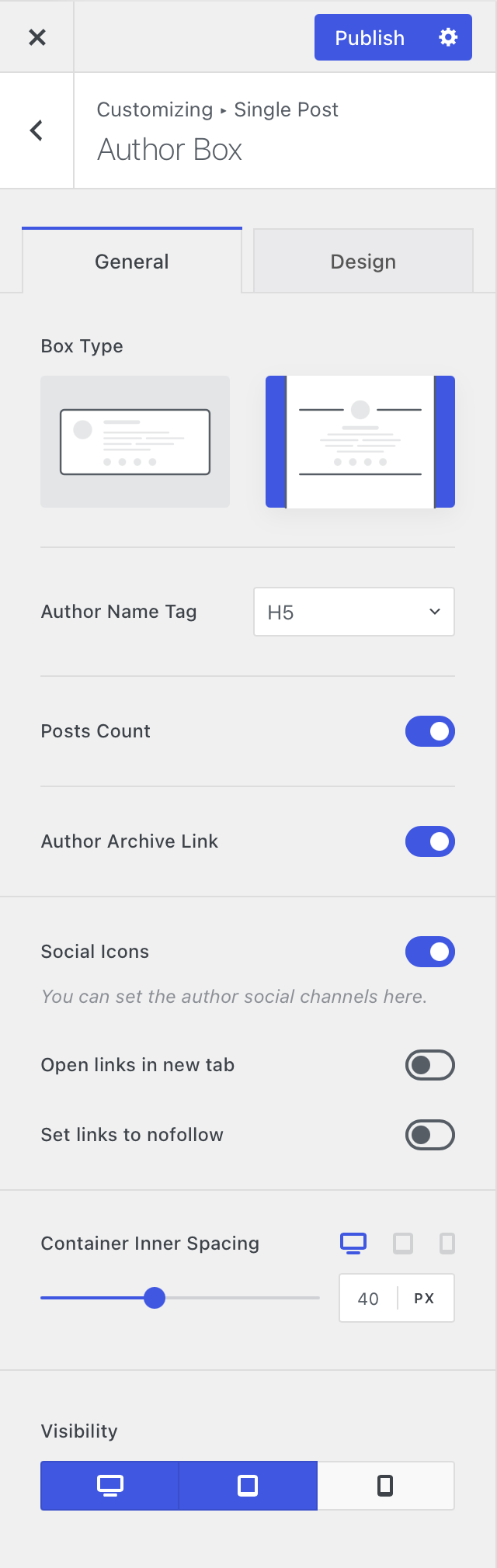
- Box Type – choose between an Enclosed container and a wider presentation that blends into the page layout.
- Author Name Tag – select the HTML tag used for the author’s name.
- Posts Count – display the number of posts published by the author.
- Author Archive Link – link the author’s avatar to their archive page.
- Social Icons – display the author’s configured social links, with controls for opening them in a new tab and applying
nofollow. - Spacing – adjust the spacing around the Author Box.
- Visibility – control whether the module appears on desktop, tablet and mobile devices.
Post Navigation
The Post Navigation element adds previous and next links beneath individual posts, helping readers continue browsing through your content.
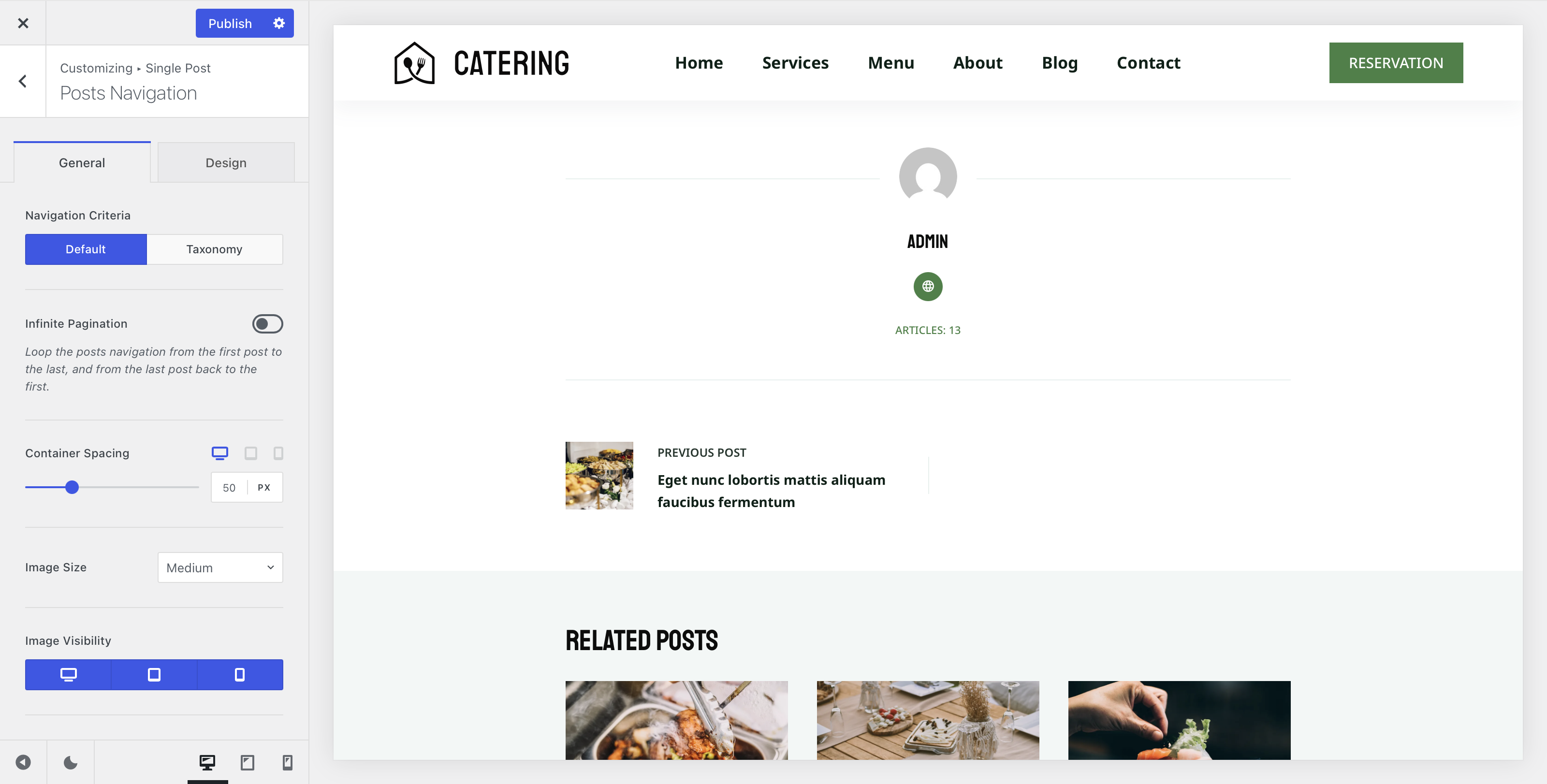
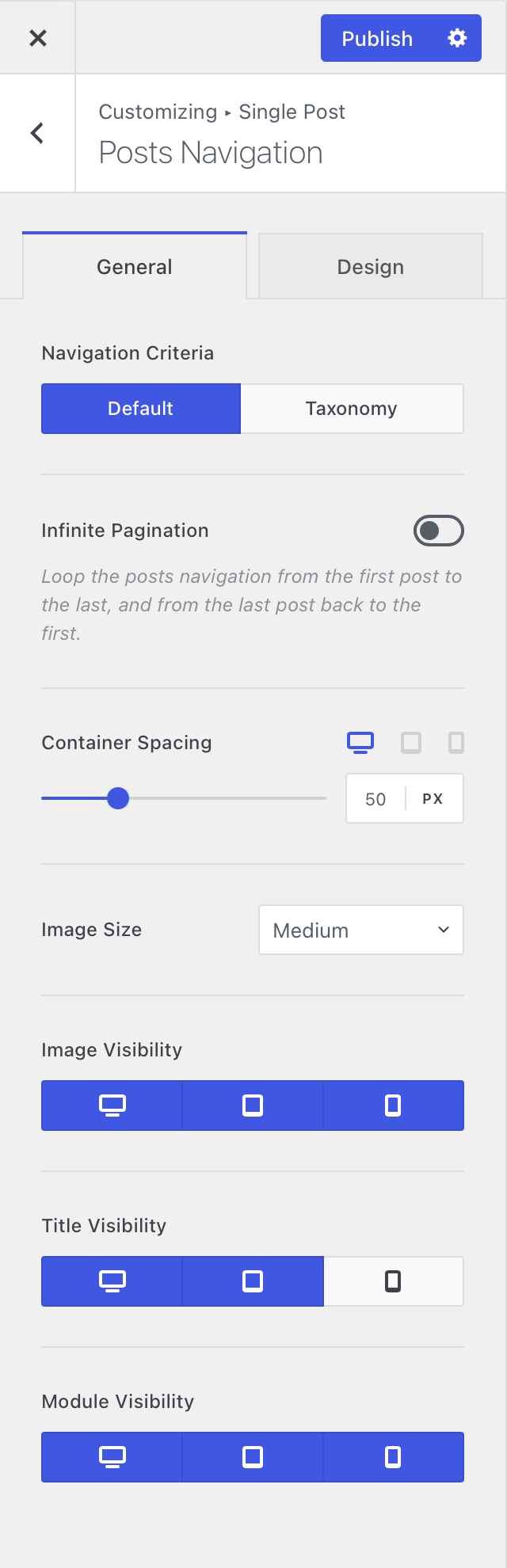
- Navigation Criteria – navigate through all posts or restrict navigation to posts belonging to the same selected taxonomy.
- Infinite Pagination – loops the navigation between the first and last available posts.
- Container Spacing – adjust the spacing around the navigation module.
- Image Size – choose which WordPress-generated thumbnail size is loaded for navigation images.
- Image Visibility – control on which devices navigation thumbnails are displayed.
- Title Visibility – control on which devices post titles are displayed within the navigation.
- Module Visibility – control whether the entire Post Navigation module appears on desktop, tablet and mobile devices.
Related Posts
The Related Posts element displays additional relevant content beneath the current post, giving readers an easy way to continue exploring your website.
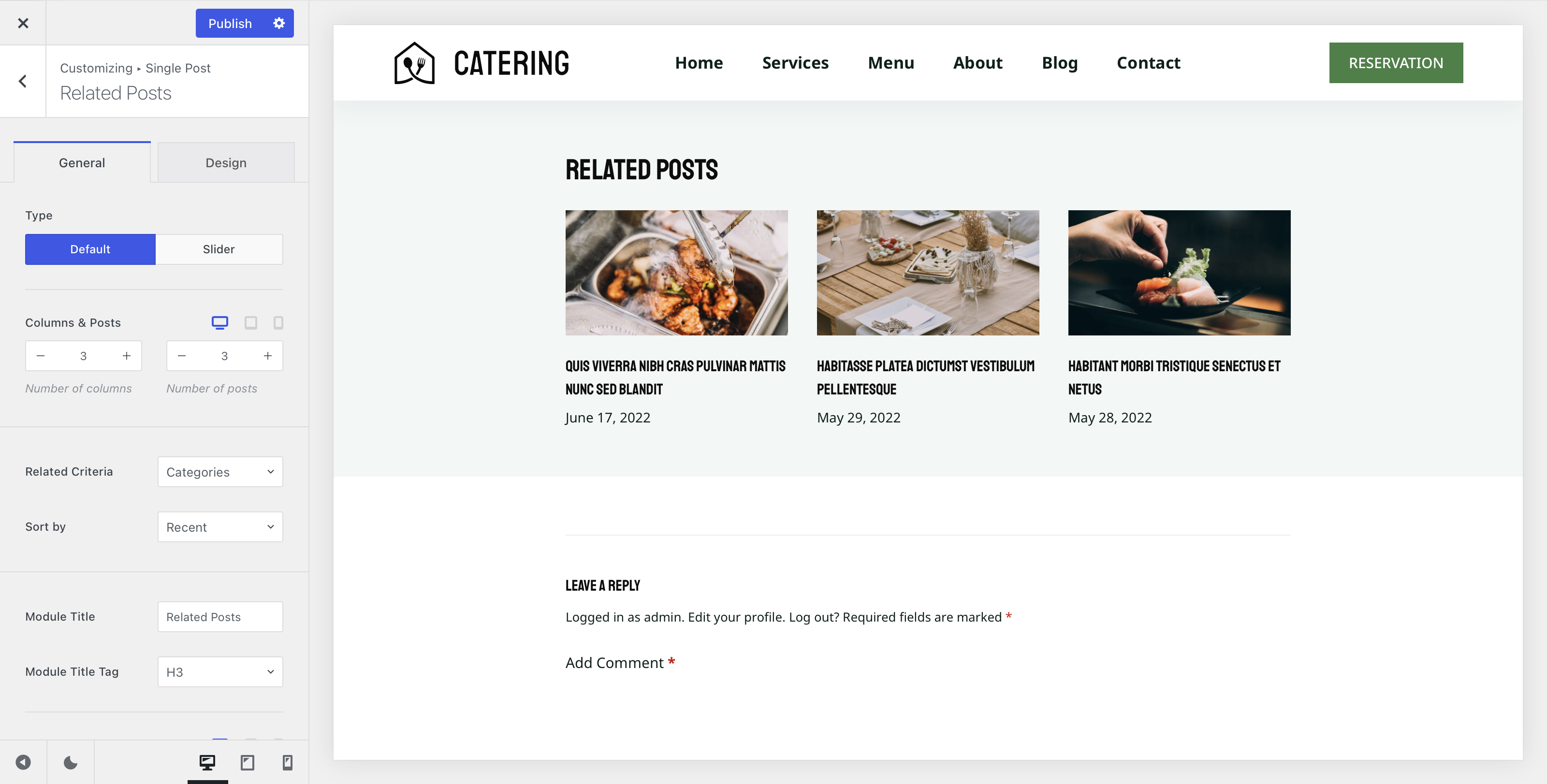
For a complete overview of its layout, query and design settings, see the dedicated Related Posts documentation.
Comments
The Comments element controls the presentation of WordPress’ commenting interface on individual posts.
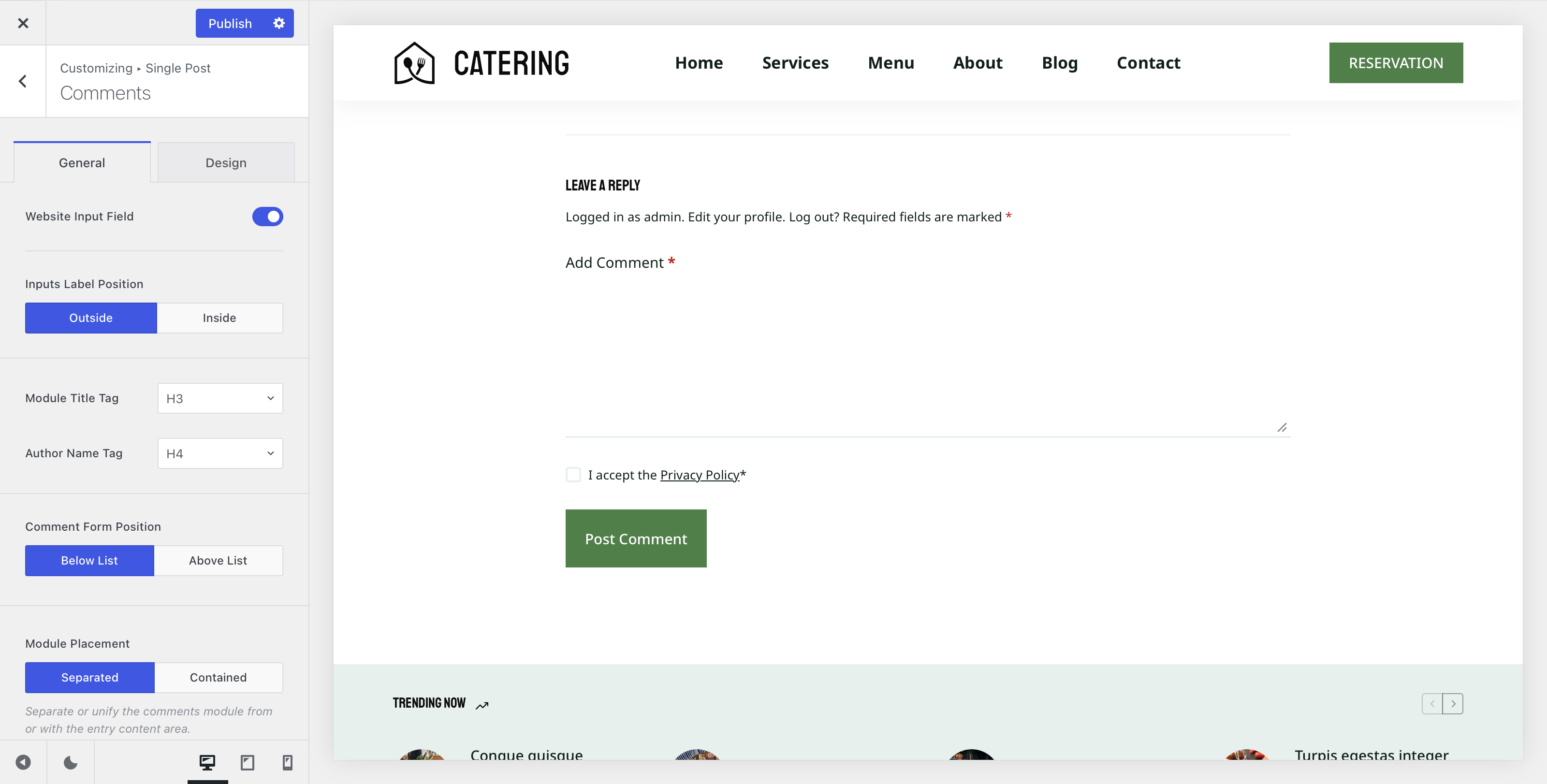
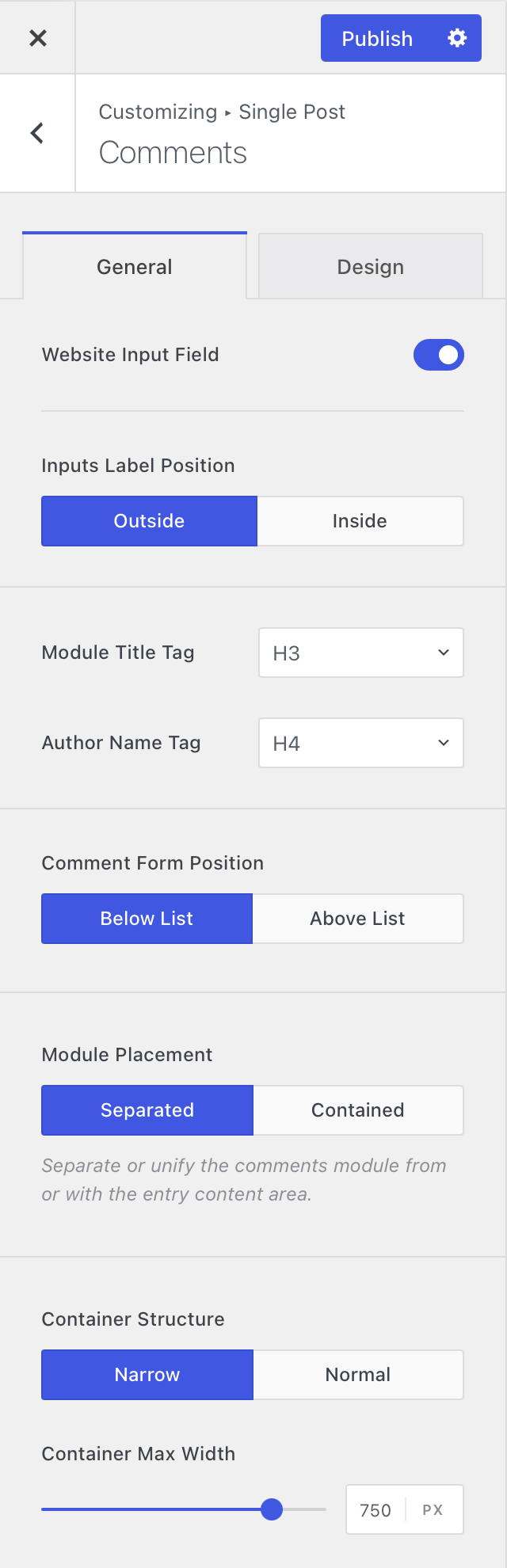
- Website Input Field – choose whether commenters can provide a website URL.
- Inputs Label Position – display field labels outside the inputs or use placeholder-style labels inside them.
- Module Title & Author Name Tags – select the HTML tags used for the Comments module title and comment author names.
- Comment Form Position – place the comment form before or after the existing comments.
- Module Placement – choose whether the Comments module is presented separately or contained within the page’s main structure.
- Container Structure – when the Comments module is placed separately, define the width of its container.
Video Tutorial
If you prefer a visual walkthrough, the video below demonstrates the main Single Post customisation options available in Blocksy.